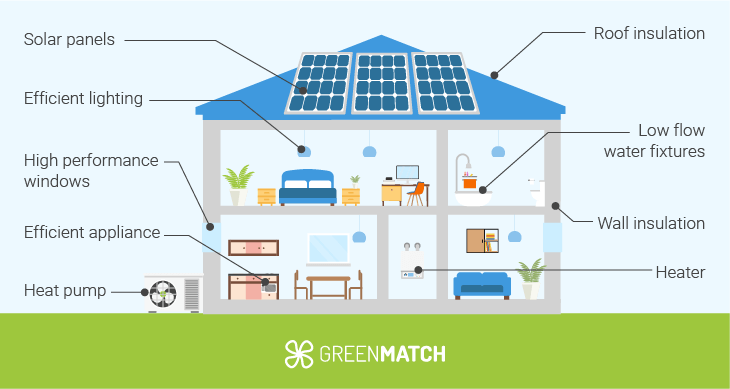
En bref : Geothermal heating delivers the highest long-term efficiency; air-source heat pumps offer strong performance with lower upfront cost; hydronic systems provide comfortable radiant warmth and better indoor air quality; routine maintenance and correct sizing yield immediate savings; pairing heat pumps with solar or smart controls maximizes Sustainable Warmth and reduces payback time. For practical guidance and supplier comparisons, consult the EcoHeat Solutions guide, and review the documented benefits of eco-friendly heating systems for measurable outcomes.
Understanding eco heating requires both system-level metrics and household-level choices. Across 2025, rising energy costs and tighter carbon targets have accelerated adoption of low-carbon HVAC technologies. This article follows a homeowner, Maya, as she evaluates options for a 1950s detached house with modest insulation and high winter demand. We compare the physics and economics of major systems, show concrete maintenance steps that improve existing equipment, and map realistic upgrade paths that combine EcoTherm Innovations and GreenHeat Systems technologies with rooftop solar from PureGreen Energy. The goal is to give clear, actionable evaluation criteria — efficiency ratings, lifecycle costs, installation constraints, and health benefits — so readers can decide whether to retrofit, partially electrify, or pursue a full geothermal conversion. Expect technical comparisons, an installation-cost framework, and a case study that translates data into decisions. The narrative also highlights where incentives and installer expertise change the balance between upfront expense and long-term savings. Final insight: pairing the right equipment with correct sizing and controls creates the largest energy and carbon reductions for most homes.
Most eco-friendly HVAC systems: why geothermal leads
Problem: conventional systems burn or convert fuel on-site, producing steady emissions and high operational cost. Solution: geothermal heating leverages the ground’s near-constant temperature to move heat efficiently, eliminating on-site combustion and dramatically lowering operational kilowatt-hours. Example: a properly sized geothermal loop coupled to a ground-source heat pump can reduce household heating and cooling energy by more than 40–60% versus legacy gas furnaces and air conditioners in many temperate climates.
Technical note: geothermal systems consist of an underground loop, a heat pump, and a distribution network (ducts or hydronic circuits). The loop’s thermal inertia stabilizes seasonal performance and yields a projected equipment lifespan approaching 50 years for ground components, reducing lifecycle emissions. For system overviews and installer checklists, see the green heating overview. Key insight: while installation cost is higher, geothermal’s constant COP (coefficient of performance) drives the strongest lifecycle savings.

Air-source versus ground-source: trade-offs and practicalities
Problem: traditional air-source heat pumps historically struggled in very cold climates. Solution: modern cold-climate air-source heat pumps maintain high performance down to subzero temperatures through variable-speed compressors and improved refrigerants. Example: Department of Energy analysis shows modern units can deliver up to three times the heat energy relative to electrical input in many conditions, making them a cost-effective retrofit for homes like Maya’s.
Operationally, air-source units require less disruptive installation and lower initial capital than geothermal. Geothermal, however, provides higher and more consistent COP year-round and can be paired with hydronic distribution for superior comfort. For practical implementation and comparisons of system benefits, consult the benefits of eco-friendly heating systems. Final insight: choose air-source for constrained sites and geothermal where land or budget allows deeper investment for greater lifetime efficiency.
Sustainable upgrades: improving efficiency without full replacement
Problem: many homes host oversized or poorly maintained systems that waste energy. Solution: targeted interventions—filter replacement, duct sealing, calibrating refrigerant charge, and smart thermostat installation—can cut consumption immediately. Example: replacing clogged filters and sealing leaks in Maya’s ducts reduced her heating runtime by approximately 12–18% in the first winter after service.
Technical measures include correct equipment sizing (manual J load calculations), adding zoning, and upgrading to high-AFUE furnaces if electrification isn’t yet viable. High-efficiency furnaces today reach 90–98% AFUE, while heat pumps commonly exceed seasonal HSPF and SEER benchmarks compared to older systems. For practical step-by-step maintenance guidance, see the sustainable HVAC tips. Final insight: pragmatic maintenance and right-sizing deliver outsized returns before any major capital investment.
Hydronic systems and indoor air quality
Problem: forced-air systems circulate allergens and suffer distribution losses. Solution: hydronic heating uses hot water through pipes and radiators or in-floor tubing to deliver radiant warmth with minimal air movement. Example: in retrofit scenarios, converting to hydronic distribution while keeping a modern boiler (or pairing with geothermal) often increases thermal comfort and reduces perceived drafts and dust.
Hydronic systems pair well with low-temperature heat sources like heat pumps and geothermal, increasing seasonal efficiency. They also provide long-term comfort advantages and can lower perceived thermostat settings by several degrees. Final insight: hydronic conversion is a compelling path when occupant health and comfort are priorities.
Cost structure, incentives and payback frameworks
Problem: high upfront cost deters many homeowners from low-carbon systems. Solution: build a payback model that incorporates incentives, avoided fuel purchases, and projected maintenance savings. Example: an air-source heat pump installation often starts in the low thousands; a full geothermal system typically lands in the tens of thousands depending on loop type and local geology.
Policy context in 2025: enhanced rebates and tax credits in many jurisdictions shorten payback windows for electrification, and some utilities offer performance-based incentives for demand reduction. Use lifecycle cost comparisons that include expected equipment life (geothermal loops ~50 years, heat pumps ~15–25 years) and local energy prices. For detailed economic arguments and case studies, review the benefits of eco-friendly heating systems and the EcoHeat Solutions guide. Final insight: incentives and rising gas prices are tipping the economics toward electrified, renewable-based systems for many homeowners.
Case study — Maya’s retrofit path
Problem: Maya’s 1950s house had an aging furnace, high bills, and poor comfort. Solution: she implemented a staged upgrade: duct sealing and insulation, replacement of the furnace with a cold-climate EcoSmart Heat air-source heat pump, and later rooftop solar sized to cover heat pump electricity in winter shoulder months.
Outcome: her bills dropped, peak demand decreased, and indoor comfort improved; the combined strategy shortened payback compared to an immediate expensive geothermal install. For contractors and installer selection, check the comparative guidance at the switch to geothermal heating. Final insight: staged retrofits allow homeowners to capture immediate savings while preserving optionality for deeper future investments.
Where to find expertise and trusted technology partners
When selecting installers and equipment, prioritize demonstrable project experience, performance warranties, and familiarity with incentives. Organizations like GreenEnergy Co., EcoWise Heating, RenewHeat Technologies, and GreenFlow Heating are representative of suppliers that combine product lines with installer networks; compare quotes and ask for measured performance data post-installation.
Use third-party performance reports and ask for references from recent installations in comparable homes. If integrating solar, coordinate inverter and control specifications with your HVAC installer to ensure optimal interaction. For a practical supplier checklist and decision matrix, consult the benefits of eco-friendly heating systems and the EcoHeat Solutions guide. Final insight: the right combination of installer competence, system design, and controls determines real-world savings more than any single equipment spec.
Next step : contact a local specialist to run a site-specific load calculation and incentives screen, and request measured performance data from recent installs to validate projected savings. For tailored quotes and system planning, speak with D&B ClimateCare or vendors referenced above to frame a practical pathway to Sustainable Warmth for your home.