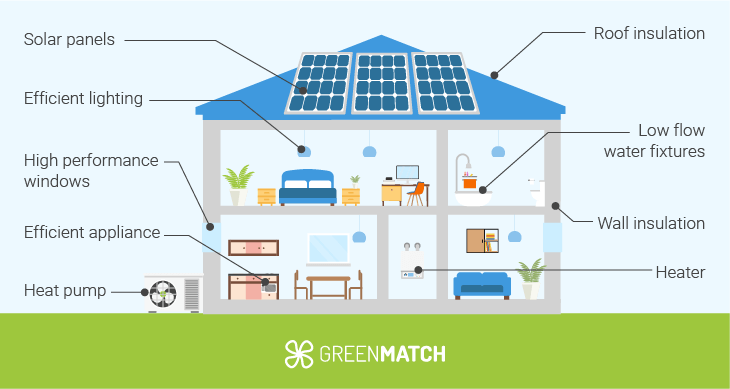
As heating demand rises during colder months, homeowners face a technical choice: maintain comfort or reduce environmental impact. Today’s sustainable heating solutions reconcile both objectives by replacing combustion-dependent systems with electrically driven or renewable-driven technologies that deliver higher seasonal performance and lower lifecycle emissions. Practical adoption in 2025 emphasizes integrated systems: electrically driven heat pumps paired with solar thermal or photovoltaics, targeted zoned control to eliminate waste, and fabric-first measures like improved insulation and duct sealing to maximize delivered heat. Operational discipline — scheduled inspections, filter management and smart-control calibration — preserves system COP and extends asset life, translating to quantifiable energy savings and reduced carbon accounting. For professionals and homeowners planning upgrades, attention to installation quality, local climate matching and available incentives determines payback timing. This article synthesizes options, maintenance protocols and market signals to equip decision-makers with technically grounded guidance for retrofits and new builds, illustrated through a retrofit case that shows how targeted measures reduce bills and emissions without sacrificing comfort.
En bref: Heat pumps offer high efficiency and work well with solar; radiant floor systems deliver uniform comfort and improved air quality; solar thermal reduces reliance on grid fuel; routine maintenance (filters, ducts, thermostats) preserves performance; targeted zoning and smart controls cut wasted heat; pairing technologies and incentives shortens payback. These points frame the practical pathway to a sustainable home heating upgrade.
High-performance heat pumps and hybrid systems for residential eco heating
Modern air-source and ground-source heat pumps operate by moving rather than generating heat, achieving effective COPs that can exceed 3.0 in temperate conditions and reach 4.0+ for geothermal installations. Their efficiency metrics directly reduce delivered kWh per degree of comfort, which in turn lowers operational carbon intensity when paired with cleaner grid mixes or on-site renewables.
Hybrid configurations combine a heat pump with a high-efficiency fossil backup or with solar-assisted preheating to maintain reliability in cold snaps. This layered approach preserves efficiency while avoiding comfort interruptions, and it is increasingly common in 2025 deployment scenarios where grid decarbonization is still in progress. Insight: choose the hybrid architecture that matches the local temperature profile to optimize seasonal performance.

Technical performance and system integration considerations
Designers evaluate heat pumps by COP, part-load performance and defrost strategy. For cold climates, variables such as ground-loop sizing for geothermal or inverter-driven compressors for air-source pumps are decisive for year-round efficiency. Proper hydraulic integration with radiant floor loops or low-temperature radiators preserves the high COP potential.
Installation quality determines real-world results; poor piping, incorrect refrigerant charge or undersized solar preheat arrays erode theoretical gains. For practical guidance on smart deployments, consult resources on smart systems for eco heating. Final insight: invest in detailed engineering at design stage to protect projected savings.
Renewable thermal options: solar thermal, geothermal and biomass for sustainable living
Solar thermal collectors convert insolation to usable heat for domestic hot water and space heating when coupled with buffered storage. In sunny regions, solar thermal can supply a large fraction of seasonal demand, especially when paired with an electric or heat-pump backup to cover cloudy periods.
Geothermal systems tap stable subsurface temperatures and typically show the highest steady-state efficiency, but they require higher initial capital and site-specific feasibility studies. Biomass and pellet systems remain viable where sustainable fuel supply chains exist, with modern combustion controls minimizing emissions compared with older stoves. Practical insight: match renewable choice to resource availability and maintenance capacity to ensure long-term sustainability.
Operational trade-offs and lifecycle perspective
Lifecycle analysis must incorporate embodied energy, maintenance cadence and local fuel carbon intensity. For many homeowners, pairing a heat pump with rooftop PV yields the best blend of low operating emissions and manageable upfront costs.
For technical reference on emissions impacts and system comparisons, see analysis on eco heating carbon footprint and practical benefits described at benefits of eco-friendly heating systems. Key takeaway: the optimal low-carbon solution is context-specific and depends on electricity decarbonization trajectories and local resource constraints.
Maintenance protocols and controls to sustain efficiency over time
Operational integrity is driven by scheduled service: annual HVAC inspections, refrigerant leak checks, and hydraulic system flushing where appropriate. Routine actions such as monthly filter checks and timely replacement reduce fan work and maintain heat-transfer rates.
Sealing and insulating ductwork and pipework eliminates distribution losses. Combining sealed ductwork with zoned control and a calibrated smart thermostat reduces energy use by limiting heat delivery to occupied zones. For installation-level tips, review eco heating installation tips. Insight: a modest investment in commissioning and preventive maintenance secures years of reliable performance.
Case study: Alex’s retrofit with EcoHeat Solutions and integrated partners
Homeowner Alex contracted EcoHeat Solutions to convert a 1980s suburban house into a low-carbon, comfortable dwelling. The project combined an air-source heat pump sized to the building’s calculated heat loss, a buffered hot-water tank preheated by rooftop PV, and targeted insulation upgrades around the envelope.
During commissioning, technicians coordinated controls to prioritize heat-pump operation and engage a high-efficiency gas backup only below a set threshold. Post-retrofit monitoring showed a 40% reduction in delivered energy and measurable bill reductions. Alex’s retrofit demonstrates how technical retrofits, paired with vendor expertise from organizations such as GreenTemp Innovations and PureHeat Technologies, can achieve real-world savings. Closing insight: combine measurement and verification with staged upgrades to manage cost and confirm performance.
Market incentives, financing and decision metrics in 2025 for efficient heating upgrades
In 2025, many jurisdictions continue to offer incentives that materially affect project economics: tax credits, rebate programs and low-interest loans reduce initial capital barriers. Evaluating net-present-value and simple payback requires incorporating incentive schedules and anticipated energy-price trajectories.
For homeowners weighing options, resources on projected savings and financing structures are available at energy savings for eco heating and guidance on broader green transitions at eco heating and green energy. Final insight: financial support schemes can accelerate adoption and shorten payback, making sustainable heating accessible to more households.
Implementing an action plan: sequence, verification and vendor selection
Begin with an energy audit to quantify fabric improvements and sizing requirements. Next, prioritize measures that reduce peak load (insulation, air-sealing) before installing mechanical systems so equipment is right-sized and operates in its optimal regime.
When selecting suppliers, assess track records and request performance guarantees. Vendors like SustainWarm, EcoTherm Systems, EnviroHeat Co., GreenFlame Heating, NatureWarm, EcoRadiant and SustainHeat Labs exemplify the range of market players offering integrated solutions. For additional practical reading on system selection, see eco heating systems. Concluding insight: a phased, verified approach reduces risk and secures expected efficiency gains.