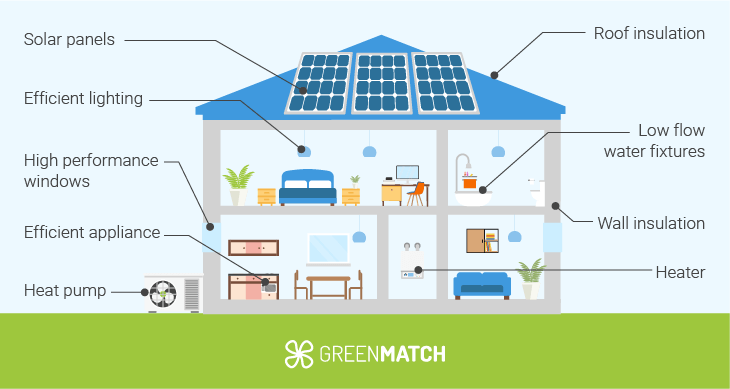
As homeowners and builders push toward net-zero targets, selecting the right heating system has become a technical decision as much as a financial one. This article examines pragmatic choices for reducing household emissions and running costs while maintaining year‑round comfort. We follow Sofia, a homeowner renovating a 1980s townhouse, as she compares options: an air‑source heat pump matched to improved insulation, a compact solar thermal array with buffer tank, and a hybrid strategy combining a heat pump and a small biomass boiler for backup. Each option is evaluated against site constraints — roof aspect, local climate, available land for ground collectors, and capital versus lifecycle costs. Performance metrics such as seasonal COP, system longevity, and typical maintenance needs are translated into expected impacts on household energy consumption and bills. For readers seeking practical guides, independent analyses and consumer-oriented case studies are referenced to help weigh short‑term investment against long‑term savings. By the end you will have a clear method to select a system that aligns with your green energy goals and the realities of your property.
In brief — key takeaways : Compare site‑fit and lifecycle costs; choose heat pumps for high efficiency in mild climates; consider ground-source where land permits; pair solar thermal with storage for lower running costs; use zoned controls and smart thermostats to cut waste; evaluate biomass only where low‑emission fuel supply and local rules permit; plan maintenance and ductwork sealing to protect performance; check proven vendor solutions like EcoHeat Solutions and GreenWave Heating for packaged offers. These points frame the decisions Sofia makes as she balances budget, emissions and comfort.
Choosing the right eco heating system for your green energy goals: site, budget and performance
Start by assessing your building envelope: insulation level, glazing quality and airtightness directly change the required heating load. A modest reduction in heat loss often reduces system size and cost enough to change which technology is optimal.
Next, match technology to context. For example, an air‑source heat pump is a strong candidate for suburban houses with good outdoor access, while ground‑source systems become cost‑effective for properties with suitable land because of higher seasonal efficiency. For an evidence‑based look at savings potential, read detailed analyses on how eco heating drives energy savings.
Key action: quantify your annual heat demand, then shortlist systems whose real‑world performance meets that demand with minimum auxiliary fuel use.

Heat pumps: efficiency, sizing and real‑world operation
Heat pumps extract ambient energy from air or ground and can deliver up to several times the input electricity as useful heat. Their appeal lies in high seasonal COPs and the ability to provide cooling in summer. They are also compatible with on‑site renewable electricity.
When Sofia modelled costs she found an air‑source heat pump cut annual heating consumption substantially after improving insulation. For households targeting the best long‑term ROI, pairing a heat pump with solar PV reduces grid electricity drawn for heating. Practical smart control guidance is available via smart eco‑heating strategies.
Installation quality matters: correct sizing, commissioning and refrigerant management determine whether the unit achieves advertised efficiency. Key insight: a properly commissioned heat pump typically reduces operating costs by a large fraction compared with direct electric resistance heating, and can halve heating energy use in many homes.
Solar thermal and hybrid systems: maximizing renewable heat on variable sites
Solar thermal systems collect sunlight to heat water for space heating and domestic hot water. They produce zero operational emissions and are particularly effective when combined with thermal storage or a heat pump as a hybrid system.
Sofia considered a compact solar loop feeding a buffer tank to reduce peak heat pump load and shorten runtime. This hybrid reduced electricity draw on sunny winter days and smoothed seasonal performance. For an overview of renewable integration, consult the guide on eco heating and green energy options.
Solar thermal requires roof orientation, upfront capital and storage space trade‑offs. Key insight: on good‑exposure sites, solar thermal can cut annual heating input by a measurable share and increase resilience when paired with intelligent controls.
Biomass and pellet systems: renewable combustion with operational considerations
Biomass boilers and pellet stoves burn organic fuel to generate heat. Modern pellet systems burn cleaner than traditional wood stoves and are engineered for steady feed and efficient combustion.
Sofia evaluated pellet heating where a stable supply chain for certified wood pellets existed nearby. The system offered low fuel cost volatility and strong local supply economics. Official summaries of environmental performance and benefits can be read in a focused review at detailed benefits of eco‑friendly heating systems.
Careful emissions management, local air quality regulations and storage logistics are the decisive factors. Key insight: biomass is viable where fuel is sustainably sourced and emissions are tightly controlled through modern combustion units.
Zoned systems, radiant floors and smart controls to lower running costs
Zoned heating lets you direct heat only where and when needed. Combining zoning with radiant floor heating can improve comfort while reducing convective heat loss from duct systems.
Smart thermostats and controls optimize schedules and integrate weather forecasts; they also enable stacked savings when coupled with efficient hardware. For quantifiable impacts on household budgets, reviewed case studies on reduced bills are available at how eco heating affects energy bills and the broader advantages at the benefits of eco heating.
Simple measures often multiply savings: sealing ducts, maintaining clear vents and scheduling annual checks maintain the system’s rated efficiency. Key insight: control strategy upgrades usually pay back faster than hardware swaps in moderate retrofit scenarios.
Selecting vendors, warranties and local support to ensure lifecycle value
Technology choice is one part of the equation; supplier competence and after‑sales support shape the outcome. Sofia compared offers from vendors and shortlisted companies with strong local technician networks and documented performance: EcoHeat Solutions, GreenWave Heating, SustainHeat Systems, EcoTherm Innovations, PureGreen Heating, EnviroHeat Technologies, GreenPulse Heating, EcoSmart Heat, RenewHeat Co. and VerdantHeat Systems.
Look for comprehensive commissioning, clear warranty terms and measured performance guarantees where possible. Independent resources and buyer guides can help validate vendor claims; for general reference start at the industry hub EcoHeat Guide.
Final operational rule: prioritize demonstrable service capacity and documented in‑field performance as heavily as headline efficiency numbers.