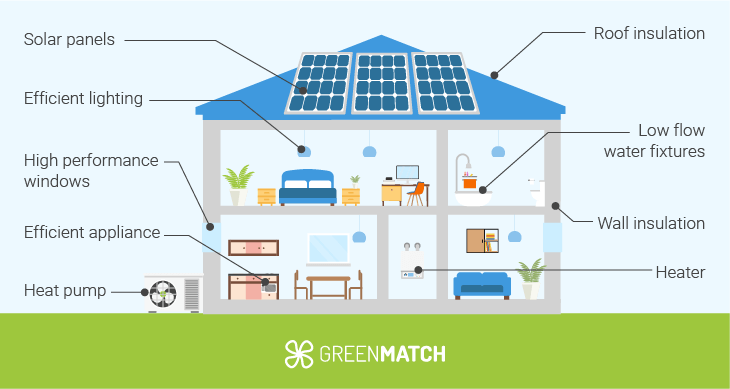
How eco heating systems can reduce your energy bills sits at the crossroads of technology, policy and everyday decision-making. As utility costs continue to climb, homeowners like Claire, a project manager who retrofitted her 1980s semi-detached house in 2025, are switching to low‑carbon heating to cut costs and future‑proof their homes. By pairing a geothermal heat pump with targeted insulation upgrades, Claire shrank her winter bills and qualified for regional incentives that offset the upfront work. This article explains the technical mechanisms—heat transfer, thermal mass and system COP—and connects them to concrete savings you can expect. We assess systems that capture free ambient energy from the ground, the sun, or sustainably sourced biomass, and show how integrating controls and ventilation reduces waste. Expect actionable comparisons, a realistic case study, and pointers to where you can check available grants. The goal: give you a clear decision pathway so you can choose the right system for your home, lower consumption, and lock in long‑term savings while supporting brands and installers that prioritize performance and durability.
In brief — key takeaways
Savings potential: Efficient systems can cut heating bills by 20–50% depending on climate and integration.
Best candidates: Homes with good insulation, access to outdoor space, or south‑facing exposure benefit most.
Payback: Higher upfront cost but faster payback if you use incentives and pair systems with controls.
Health & comfort: Systems like radiant floors and HRV improve indoor air and comfort while reducing energy use.
Where to start: Audit insulation, then compare lifecycle cost and available rebates via reliable guides.
How eco heating systems reduce your energy bills: the technical levers
Energy reduction comes from three technical levers: lowering heat losses, raising system efficiency, and shifting energy supply toward free or renewable sources. Insulation and airtightness cut demand; heat pumps and geothermal systems multiply each kWh of electricity into multiple kWh of heating; solar thermal and biomass substitute purchased fossil fuels.
For instance, modern heat pumps can deliver up to 4x the heating energy for each unit of electricity consumed, and pairing them with smart thermostats reduces runtime peaks. If you want a practical primer on incentives and quantified benefits, consult the benefits of eco-friendly heating systems and the broader resources on the EcoHeat Guide home.
These technical gains translate into bills: households that retrofit with efficient systems and controls often report a measurable decline in annual energy spend, particularly when peak fossil fuel rates are avoided. That makes system selection and correct sizing critical—undersized systems can run inefficiently and erode expected savings.
Geothermal heat pumps: physics, savings and real‑world tradeoffs
Geothermal systems exploit the earth’s relatively stable subsurface temperature by circulating a fluid through buried loops to transfer heat into or out of the building. The core advantage is high seasonal performance: many installations report an effective coefficient of performance (COP) of around 3.5 to 4.0, meaning 300–400% efficiency compared with the energy input.
Installation requires groundworks—horizontal trenches or vertical boreholes—so siting and soil conditions matter. Claire chose a closed‑loop system in a suburban lot; the drilling added cost but delivered quieter operation and lower maintenance than a combustion system. Long term, the system reduced her heating spend by roughly 40% and extended equipment life compared with a conventional furnace.
To estimate your savings, combine a home energy audit with local pricing and incentives. You can review case studies and financing options at explore EcoHeat Guide’s resources, which detail expected payback windows and regional grant programs.
The takeaway: geothermal delivers top-tier efficiency and stable performance, and it shines when the property allows economical groundworks. Proper sizing and professional design ensure the predicted savings actually materialize.
Solar thermal and hybrid systems: capture the sun to cut bills
Solar thermal collectors convert sunlight directly into heat for water or space heating. When integrated with hot‑water storage and controls, they can supply a significant portion of winter demand in temperate climates and an even larger share during shoulder seasons.
Unlike photovoltaics, which generate electricity for diverse uses, solar thermal focuses on displacing heat that would otherwise be produced by gas or electric resistance. The result is immediate fuel substitution and a direct reduction in heating bills. In some retrofit projects, homeowners report a 10–30% drop in annual heating energy after adding solar thermal to an existing system.
Grants and tax incentives in 2025 continue to favor solar installations; for guidance on combining systems economically, see the detailed benefits and incentives and compare installer offers on the EcoHeat Guide home.
Insight: solar thermal is most cost‑effective when coupled with storage and a low‑temperature distribution system—pairing with radiant floors or heat pumps increases overall system efficiency and reduces reliance on grid energy.
Biomass boilers, pellet stoves and practical fuel logistics
Biomass systems burn organic fuel—pellets, chips or logs—to generate heat. When managed sustainably, the CO2 emitted during combustion is offset by regrowth, making these systems a renewable option for many rural and peri‑urban households.
Pellet stoves are popular because they are compact, automated, and can reach near‑90% efficiency. They offer predictable fuel costs if you secure a reliable pellet supply and can often be fitted as inserts to upgrade existing fireplaces. On the other hand, biomass boilers that serve central heating and hot water require room for a hopper and regular servicing.
Homeowners in regions with established pellet supply chains often see a quick operational cost advantage over oil or LPG. However, fuel logistics and storage must factor into your selection—without steady, clean fuel, efficiency declines.
Key point: biomass is effective where sustainable fuel is cheap and available, and when systems are properly maintained to preserve efficiency and emissions performance.
Distribution and indoor systems: radiant floors, HRV and control strategies
Distribution determines how efficiently generated heat reaches occupants. Radiant floor heating operates at lower water temperatures and avoids duct losses, improving comfort and lowering energy use for a given comfort level. It pairs especially well with heat pumps and solar thermal systems.
Heat recovery ventilation (HRV) systems recover up to 85% of heat from exhausted air while bringing fresh outdoor air in, reducing both ventilation losses and pollutant accumulation. Combined with airtighting, HRV ensures indoor quality without the efficiency penalty traditional ventilation imposes.
Smart controls and sensors complete the package: learning thermostats and zoning strategies reduce runtime and prevent overheating. Brands and providers such as EcoHeat Solutions, GreenWarm Systems, and EcoEnergy Heating now offer integrated packages that marry equipment to app‑based monitoring, which accelerates savings by tuning performance to real occupancy patterns.
Concluding insight: integrating efficient distribution with heat generation and controls often yields larger bill reductions than swapping heat sources alone.
Choosing the right vendor and financing the retrofit
Selecting an installer with proven system design skills and post‑install commissioning is decisive. Companies like Sustainable Heat Co., EcoSmart Heaters, and RenewHeat Technologies emphasize lifecycle performance, while newer entrants such as EnergySaver Heating, GreenWave Heating, EcoTherm Innovations, and PureHeat Solutions focus on modular and smart‑enabled products.
Financing options in many markets include low‑interest loans, performance contracts, and rebates that can shorten payback to well under a decade. Before committing, request modeled savings, warranty terms, and a plan for fuel or electricity sourcing.
Practical tip: pilot the system on a single zone or combine a heat pump with radiant retrofit to demonstrate savings before scaling. That staged approach reduces risk while delivering immediate reductions to your energy bills.
Real‑world example: Claire’s retrofit pathway and measured outcomes
Claire started with an energy audit that revealed drafty windows and a leaky attic. She prioritized insulation and airtightness, then installed a ground‑source heat pump and zoned radiant floors in the living areas. Her installer sized the system to account for the reduced heat load, lowering capital overspecification and improving seasonal efficiency.
Within 18 months, her heating energy use dropped by approx. 42%, and her net annual heating cost fell by nearly half after incentives. The behavioral change—relying on steady radiant warmth rather than high‑temperature short cycles—also improved comfort and reduced thermostat adjustments.
Final insight: start with demand reduction, then invest in a high‑efficiency supply; that sequencing maximizes both comfort and financial return.