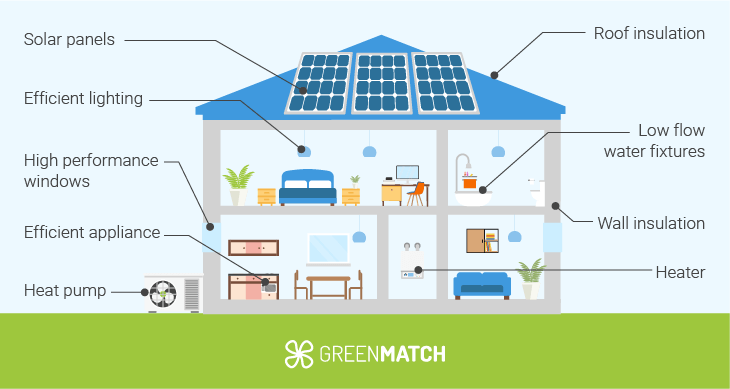
What to know before installing an eco heating system frames the operational, regulatory and economic realities any homeowner must address before committing to low‑carbon heating. John, a research specialist who has guided thousands of retrofits, uses the case of Lena, a two‑storey semi with thin loft insulation and a gas boiler nearing end of life, to show the practical trade‑offs between upfront cost, efficiency and long‑term value. Early decisions—system type, correct sizing and fabric upgrades—determine whether a new installation slashes carbon output or simply shifts costs around. This piece explains how to quantify building heat loss, read efficiency metrics like AFUE and SEER, and how to align choices with local codes and available incentives in 2025.
In brief — key takeaways: Assess your home’s insulation and existing ducts before selecting equipment; match system capacity precisely to floor area to avoid cycling losses; prioritise heat pumps or hybrid systems where grid decarbonisation is advanced; verify installer credentials, written proposals and warranty coverage; integrate smart controls and zonal TRVs to capture significant operational savings. These steps convert a heating purchase into a resilient, low‑carbon asset.
System selection and correct sizing for eco heating systems
Choosing the right system begins with a technical audit: measure floor area, check loft and wall insulation, and inspect ductwork or radiators for heat loss. In John and Lena’s project the audit revealed a 20% heat loss through the roof and undersized radiators that would struggle with low‑temperature heat from a heat pump.
System choice hinges on three vectors: climate, existing infrastructure and budget. For homes with ducts, a high‑efficiency air‑source heat pump is often optimal; for off‑grid or solar‑optimised homes, electric radiators paired with PV arrays make sense. Read manufacturers’ performance data (look for enhanced SEER2 numbers in 2025) and consult resources like the overview of eco heating systems to compare options. Precise sizing avoids the inefficiency of oversizing and the discomfort of undersizing—an insight Lena used to specify a slightly larger distribution surface rather than a bigger heat source.

Renewable technologies: heat pumps, solar and biomass in practice
Heat pumps remain the technical front‑runner: modern units often deliver 300–400% seasonal efficiency under optimal conditions, translating to much lower running costs where electricity is low‑carbon. Geothermal systems provide higher baseline efficiency but demand space for ground loops and larger initial capital.
Solar thermal and PV‑driven electric heating reduce marginal cost per kWh when paired correctly; in sunnier regions PV can cut heating bills by significant percentages. Biomass boilers still offer a decarbonised fuel path where sustainably sourced pellets are available, but they require combustion space and supply logistics. For comparative benefits see the analysis on benefits of eco-friendly heating systems and the implementation notes at sustainable heating strategies.
In Lena’s retrofit, a ground‑mounted PV array coupled with an air‑source heat pump and enlarged aluminium radiators provided the best lifecycle cost and emissions outcome. The operational insight: match heat delivery temperature to emitter area to retain pump COPs above design targets.
Preparing the building fabric and distribution before installation
Even the most efficient heater underperforms in a leaky building. Prioritise wall, loft and floor insulation, and perform targeted draught‑proofing around doors and window frames. John’s checklist for Lena included sealing secondary chimney flues and upgrading loft insulation to reduce heat loss by an expected up to 35%, which downsized the heat pump required and lowered capital cost.
Assess radiator surface area: heat pumps require larger emitter areas to deliver the same comfort at lower flow temperatures. If pipes and ducts are ageing, replace or insulate them to stop distribution losses. For quantifiable savings and behavioural control tips consult the energy efficiency resources at energy savings from eco heating.
Practical example: swapping two cast‑iron radiators for aluminium panels in Lena’s living room cut warm‑up time and reduced standing losses, enabling smarter scheduling without comfort loss—an effective operational lever.
Permits, codes and professional vetting
Local regulations determine permitted equipment, required inspections and minimum efficiency thresholds. John emphasises checking municipal rules early: many jurisdictions now require higher SEER/AFUE minima and specific permits for groundworks or flue changes. Failing to comply can force costly retrofits after installation.
Vet contractors for licenses, insurance and manufacturer training. Request three detailed proposals that separate equipment, labour and ancillary works, and confirm warranty length for both parts and labour. Use independent reviews and ask for recent installations of the same technology—this revealed a pattern of speed and reliability in the team Lena shortlisted.
For guidance on selecting contractors and legal compliance, see practical contractor‑selection advice at eco heating and regulatory considerations. The final insight: a fully documented install record simplifies warranty claims and future resale.
Controls, future‑proofing and extracting long‑term value
Smart controls are now standard for capturing operational savings: smart thermostats and TRVs enable zoning, adaptive schedules and remote management, and can reduce annual heating use by double‑digit percentages when optimised. Integrate these with home energy platforms to shift load to on‑site renewables or cheaper tariff periods.
Future‑proofing includes fuel flexibility—dual‑fuel hybrids or systems with modular add‑ons allow switching between gas and electricity or adding storage later. Scalable systems reduce replacement risk and improve resale value; buyers increasingly prioritise low running costs and visible sustainability labels, a trend reinforced across markets in 2025.
In Lena’s case, adding a smart buffer tank and a controller that prioritised PV production cut grid draw during peak hours and extended the system’s effective life. For practical control upgrades and ROI figures consult the smart control playbook at smart eco heating controls and the operational savings study at energy savings from eco heating. The closing operational insight: integrate controls and fabric upgrades first—equipment then runs closer to its optimal performance point.
Brands and products referenced: EcoHeat Solutions, GreenWarm Technologies, SustainHeat Systems, EcoTherm Innovations, GreenEnergy Heating, EcoFlow Heat, NatureWarm Systems, EcoSmart Heating, PureHeat Solutions and EcoWise Heating appear across vendor lists and installer quotes; use them as technical comparators rather than endorsements when assessing warranties, retrofit kits and training credentials.