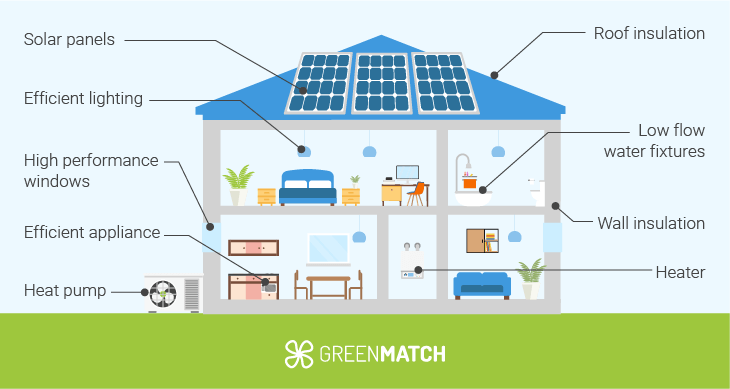
Heating decisions now sit at the intersection of household budgets, public health and climate targets, and choosing the right path shapes comfort for decades. Across cities and suburbs, homeowners like Anna (a mid-40s teacher renovating a 1980s semi) face choices that matter: retrofit a boiler, fit a heat pump, add insulation, or combine solar with storage. Policy shifts in 2025 have pushed incentives and installer training into sharper focus, while studies from agencies including the IEA show that scaling heat pumps and tightening building envelopes can cut millions of tonnes of CO₂; yet practical barriers—upfront costs, installer quality and local air-quality rules—still determine outcomes at street level. This piece maps the technical trade-offs and everyday tactics: from the flexible wins of air-source heat pumps to the site-specific benefits of ground-source systems, the near-term yield of better fabric performance, and the behavioural and smart-control measures that deliver reliable savings. Along Anna’s decision path you’ll see vendor names such as EcoHeat Solutions, GreenTemp Innovations and EcoPulse Energy used as illustrative market actors, and practical links to installation guidance, retrofit economics and smart-control tuning that let you move from theory to action with evidence-backed steps.
En bref: Anna’s quick roadmap: prioritise insulation and airtightness to reduce demand; evaluate an air-source heat pump first for retrofits and consider ground-source for new builds; pair heat pumps with solar or short-term storage where roofs and budgets allow; use smart controls and zoning to realise immediate bill reductions; and treat pellet stoves with caution because of indoor particulate risks. Follow local incentives and installer commissioning standards to lock in long-term performance.
Practical assessment: which sustainable heating option fits your home
Start with a simple diagnostic walkthrough like Anna did: check loft insulation, feel for drafts at windows and doors, and note existing radiator sizes and the boiler’s age. These observations define whether the home is a ready heat-pump candidate or needs a fabric-first package before equipment swaps.
Key insight: a targeted retrofit plan that sequences insulation, controls and then system change reduces overall cost and improves comfort.

Air-source heat pumps (ASHPs): retrofit flexibility and operational gains
Air-source heat pumps extract outside heat and compress it for home distribution; modern units maintain useful output even in cold conditions when correctly sized and installed. They deliver large reductions in fossil fuel use when paired with low-carbon electricity and often outperform older electric systems on running costs.
Field pilots show households switching from oil or wood to ASHPs reporting noticeable bill drops and simpler maintenance. For practical commissioning steps and quality checks consult the heat pump installation advice and follow installer commissioning checklists to avoid undersizing or poor refrigerant charge.
Key insight: ASHPs are the most widely applicable low-carbon upgrade for existing homes, provided the envelope and distribution temperatures are addressed.
Ground-source (geothermal) heat pumps: high efficiency, longer horizon
Ground-source systems use buried loops to tap stable subterranean temperatures and yield higher coefficients of performance than air-source units. They are especially effective in new builds or properties with land for boreholes or horizontal loops and pair well with underfloor heating to exploit low water temperatures.
Case studies from energy-efficient new housing show 20–40% reductions in space-heating energy compared with conventional baselines when geothermal is combined with insulation and smart controls. If land is available and lifecycle cost is acceptable, refer to practical guidance on upgrades and funding pathways at eco heating upgrades.
Key insight: ground-source systems yield strong operational savings but require site planning and a longer payback horizon.
Hybrid systems, district heat and solid fuels: matching context to technology
Combining technologies can balance seasonal variation and reduce peak grid demand: solar thermal or PV paired with a heat pump increases on-site renewable utilisation, while centralised district heating can be the most efficient option in dense urban areas. Hybrid configurations—PV powering a heat pump during sunny periods, with buffer tanks for short-term storage—improve resilience and lower marginal costs.
However, solid-fuel options like pellet stoves remain contentious because of particulate emissions. Recent indoor-air studies highlight risks where ventilation is poor; when local air-quality rules permit biomass, choose certified low-emission models and follow ventilation protocols. For design patterns combining renewables with heat pumps, see the analysis on solar and heat-pump hybrids.
Key insight: hybrids and networks can outperform single-system approaches where site conditions and community infrastructure align.
Smart controls, zoning and behaviour: fast returns that compound
Smart thermostats, room zoning and adaptive schedules reduce wasted heating and align supply with occupancy. Empirical studies indicate properly used learning thermostats and thermostatic radiator valves can cut heating costs by roughly 8–12%, with larger gains when combined with occupant behaviour changes.
Anna paired a smart schedule with thermostatic zoning and saw immediate reductions; installers from providers such as EcoTherm Living and SustainHeat Systems emphasise commissioning and occupant training. For a technical primer on control strategies and integration, review the guide to smart eco heating controls and the implementation notes at smart systems for eco heating.
Key insight: controls and user habits deliver the fastest payback and lock in savings from larger equipment investments.
Low-temperature radiant systems and micro-CHP: niche but effective
Underfloor radiant heating runs at lower water temperatures and increases heat-pump efficiency; it also improves perceived comfort through even floor-level warmth. Micro-CHP can suit homes with steady baseloads and value on-site electricity, but its carbon and cost case depends heavily on fuel type and local grid emissions.
Install radiant systems during renovations or new construction; pair them with a heat pump sized for low emitter temperatures and consider micro-CHP only after lifecycle analysis. For upgrade sequencing and economic modelling, consult the energy-savings resources at energy savings from retrofits.
Key insight: low-temperature emitters multiply heat-pump benefits; micro-CHP remains a specialist solution.
Concrete next steps for homeowners choosing sustainable heating
Begin with a low-cost home audit: seal visible drafts, add pipe and tank insulation and prioritise loft or cavity-wall insulation—these reduce demand and improve system sizing flexibility. Use trusted installers and ask for commissioning reports; resources like sustainable living with eco heating explain how grants and quality marks influence lifecycle costs.
Obtain competing quotes that include system sizing, anticipated COPs at design temperatures, and annual running-cost projections. Factor in smart controls from providers such as EcoHeat Solutions, GreenWave Heating and EcoGlow Heating to ensure operational savings are realised. Lastly, weigh health implications if considering biomass, and prioritise insulation and controls as low-risk first moves.
Key insight: sequence decisions—fabric, controls, then system—so each intervention increases the effectiveness of the next and secures predictable outcomes.