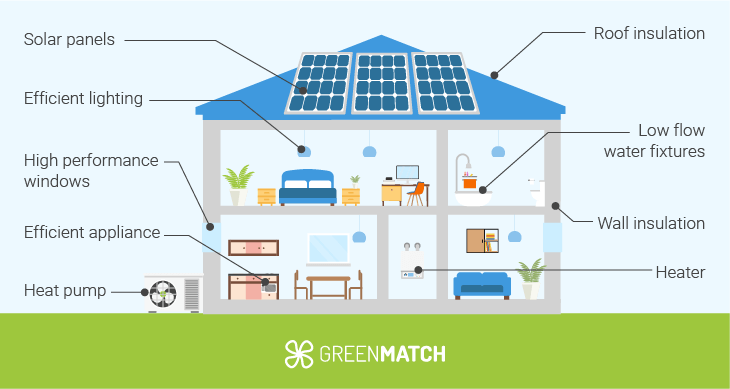
Eco heating installation: what homeowners should consider — Homeowners face a technical and financial crossroad when replacing or upgrading heating in 2025. Rising energy prices and stronger policy incentives have pushed heat pumps, solar integration and high-efficiency boilers from niche to mainstream. This report-style overview decodes the practical choices, clarifies performance metrics like AFUE and seasonal coefficients, and shows how pairing renewables with intelligent controls can cut running costs while lowering a household’s carbon footprint. Drawing on field experience from a fictional retrofit project with GreenHome Heating, you’ll get step-by-step reasoning for selecting systems, sizing equipment, and planning installation logistics so the technical decisions translate into measurable savings and reliable comfort.
En bref : Replace old boilers with high-efficiency condensing models to reduce fuel use; prioritise insulation and sealing before upsizing equipment; consider air or ground source heat pumps depending on site constraints; integrate PV and battery storage where feasible to maximise RenewHeat Installers outcomes; use smart thermostats and controls to balance comfort and efficiency; verify incentives and lifecycle costs to ensure payback.
Eco heating installation: selecting the most efficient system for your home
Start with a systems-first assessment: evaluate current heat distribution (radiators, underfloor, forced air), available fuel, roof orientation for PV, and garden area for ground loops. In our GreenHome Heating case, homeowner Maya had a mid-20th-century house with existing radiators and a south-facing roof — a scenario where a hybrid approach paid dividends.
Technically, the choice hinges on three measurable attributes: seasonal efficiency (AFUE for boilers, HSPF/COP for heat pumps), renewable fraction (how much of annual heat can come from PV or biomass), and system compatibility with existing distribution. For a gas-to-electric conversion, an air source heat pump or ductless mini-split offers a lower-install-cost route than geothermal, while geothermal often yields the best long-term efficiency.
Case insight: Maya selected a cold-climate air source heat pump sized to match the house heat loss calculation rather than the old boiler output, preserving comfort while cutting expected heating energy by roughly 30–50%.
High-efficiency boilers and modern furnaces: when to replace and what to expect
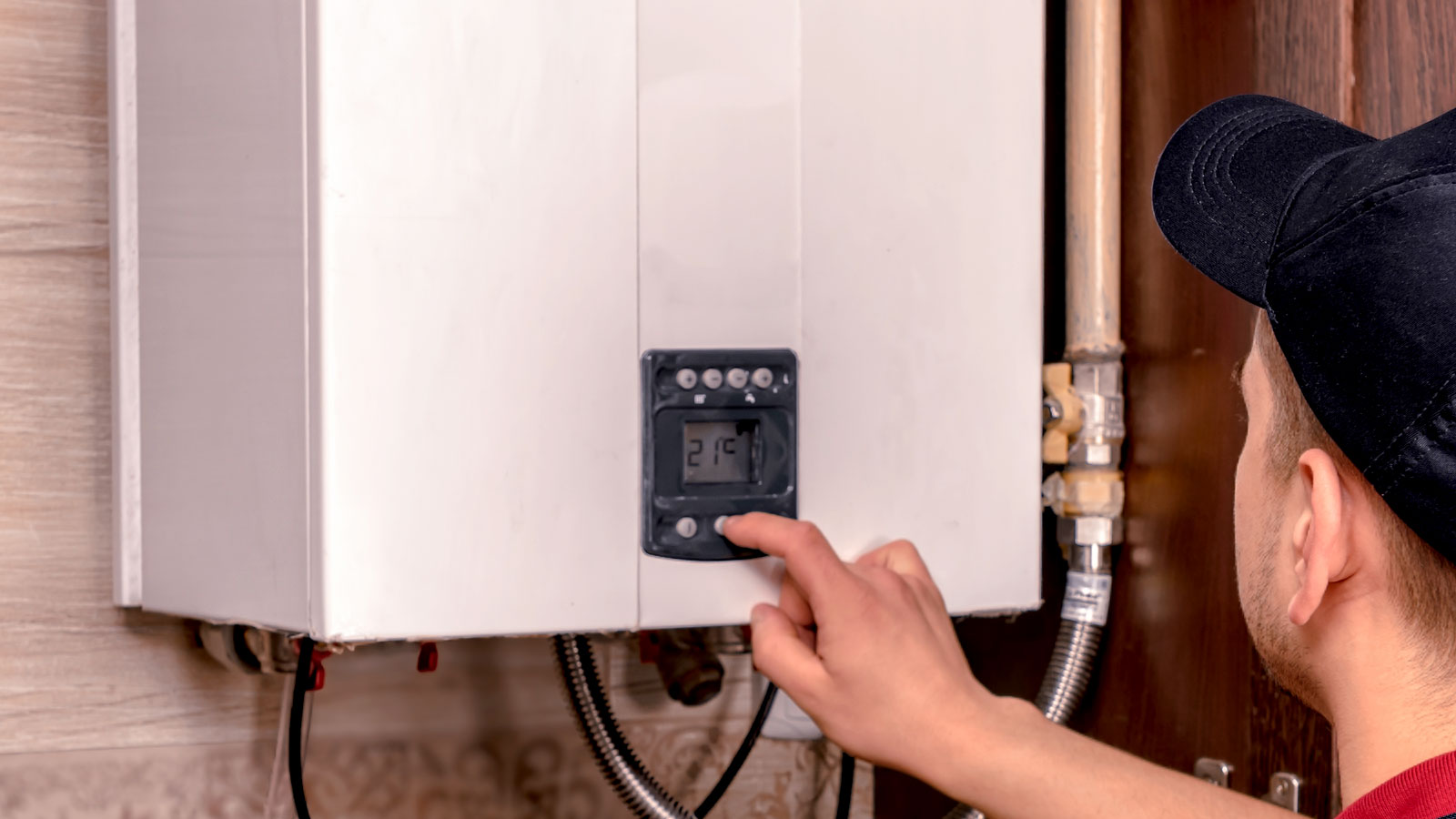
Replacing an ageing boiler remains a pragmatic, lower-cost upgrade for many homes. Modern condensing boilers routinely deliver 90–98.5% AFUE, recovering latent heat from flue gases via a secondary heat exchanger. That improvement cuts both bills and direct combustion emissions.
Choose between combi boilers (on-demand hot water) and system boilers (cylinder storage) based on hot-water demand. Pairing a new boiler with a smart thermostat and zoning cuts runtime and boosts effective efficiency. For details on installation practice and contractor checks, consult the practical installation tips resource.
Final point: always match the new unit to the reduced load after building-envelope upgrades to avoid short-cycling and to secure the stated efficiency in operation.
Heat pumps and electrification: design choices and integration with renewables
Heat pumps move heat instead of generating it, producing multiple units of heat per unit of electricity consumed. Advances in compressor technology have produced reliable cold-climate models that operate effectively deep into sub-zero conditions. When paired with rooftop PV and battery storage, a heat pump can deliver very low operational carbon intensity.
Electric heat adoption also improves indoor air quality by eliminating in-home combustion. For homeowners in oil-dependent regions, switching to electric heat can eliminate one of the largest direct carbon sources from the dwelling. See the empirical impact on household costs in the energy bills analysis.
Practical note: incorporate a buffer tank or thermal store if your system serves a radiator network designed for higher water temperatures; this avoids excessive cycling and stabilises supply temperatures. Insight: coupling a heat pump with PV and a control strategy is often the fastest route to Sustainable Warmth with controlled costs.
Ground source (geothermal) vs air source: site constraints and lifecycle trade-offs
Ground source systems extract the earth’s stable heat through horizontal loops or vertical boreholes. Their year-round efficiency is typically higher than air-source alternatives because ground temperatures are steadier.
The trade-off is upfront cost and site disruption: trenches or boreholes require space or planning permissions and higher initial capital. If land is available and long-term ownership is likely, geothermal yields the strongest lifecycle economy and is aligned with NatureTherm Systems installations.
Key takeaway: choose geothermal when the site supports it and when you prioritise maximum seasonal COP and long asset life; otherwise, modern ASHPs offer near-term affordability and flexible installation.
Smart controls, hybrid systems and operational strategy
Intelligent controls determine which heat source runs when — a crucial capability when combining renewables and backup combustion. A hybrid system might use a heat pump as primary and a condensing boiler as backup during extreme cold or when economics favour gas for short intervals. This strategy reduces peak electricity draw and can lower total emissions if managed correctly.
Smart thermostats and home energy management systems optimise runtime, exploit time-of-use tariffs, and automate PV self-consumption. Learn implementation patterns and control logic at the smart controls guide.
Operational insight: commissioning and fine-tuning of control algorithms are as important as hardware selection. A well-programmed control system maximises the renewable fraction and smooths demand peaks, delivering reliable EcoComfort Installations performance.
Storage strategies: batteries and thermal buffers
Electrical storage stores PV generation to run heat pumps at night; thermal buffers store hot water to shift heat generation to times of excess electricity. In many retrofits, a modest buffer tank reduces compressor cycling and increases seasonal efficiency.
Case note: GreenHome Heating recommended a 200–300 litre buffer for Maya’s 120 m2 house, which reduced short-cycling and allowed daytime PV to preheat store water. The result was fewer compressor starts and improved COP over the heating season.
Closing insight: pairing storage with smart scheduling increases the effective value of on-site renewable generation and reduces reliance on grid-supplied peak power.
Cost, incentives and measuring energy savings
Assess both upfront capital and lifecycle cost. Heat pumps and geothermal systems have higher initial outlay but lower ongoing fuel expense. Boilers and furnaces are cheaper to install but carry higher long-term fuel and carbon costs. Use standard metrics — payback period, net present value, and lifecycle emissions — to compare options objectively.
Many jurisdictions expanded incentives by 2025 to accelerate electrification; tax credits, rebates and low-interest loans materially change payback calculations. Consult verified sources on available support and the quantified emissions benefits at the carbon footprint and renewable energy pages.
Key financial insight: combining modest fabric upgrades with a high-efficiency system typically yields the shortest practical payback and the largest guaranteed reduction in heating demand.
Practical checklist for homeowners before installation day
Complete a heat-loss survey and get multiple quotes that include distribution and control changes. Confirm contractor credentials and warranty terms. Verify that the proposed system is sized to the post-upgrade heat loss, not to the legacy equipment output.
Maya’s installer provided a staged plan: insulation and draught-proofing first; then the heat pump and PV; finally commissioning and a 12-month optimisation window. This phased approach reduced initial capital pressure and allowed measured performance tuning.
Final insight: clear specifications and staged commissioning eliminate most common installation failures and secure the manufacturer’s efficiency claims in real operation.
Maintenance, longevity and avoiding pitfalls
Regular maintenance preserves efficiency: annual service for heat pumps, clean filters, flue checks for combustion appliances, and periodic inspection of controls and sensors. Poor installation or lack of upkeep are the main causes for underperformance.
Choose installers who provide a written commissioning report and a maintenance schedule. RenewHeat Installers and EcoWise Heating-style providers that include performance guarantees reduce homeowner risk and improve long-term outcomes.
Closing thought: a robust maintenance plan is an operational investment that protects both comfort and the environmental advantages of your eco heating installation.
Further technical resources and case studies on achievable savings and greener outcomes can be found via practical reports like energy savings studies, the vendor-neutral system comparison dossier, and policy-aware pieces such as benefits of eco heating. For implementation patterns tying smart systems to measurable efficiency gains, review the smart systems technical notes.