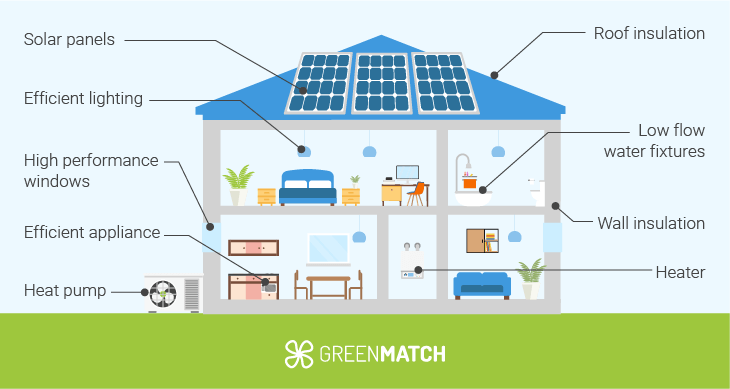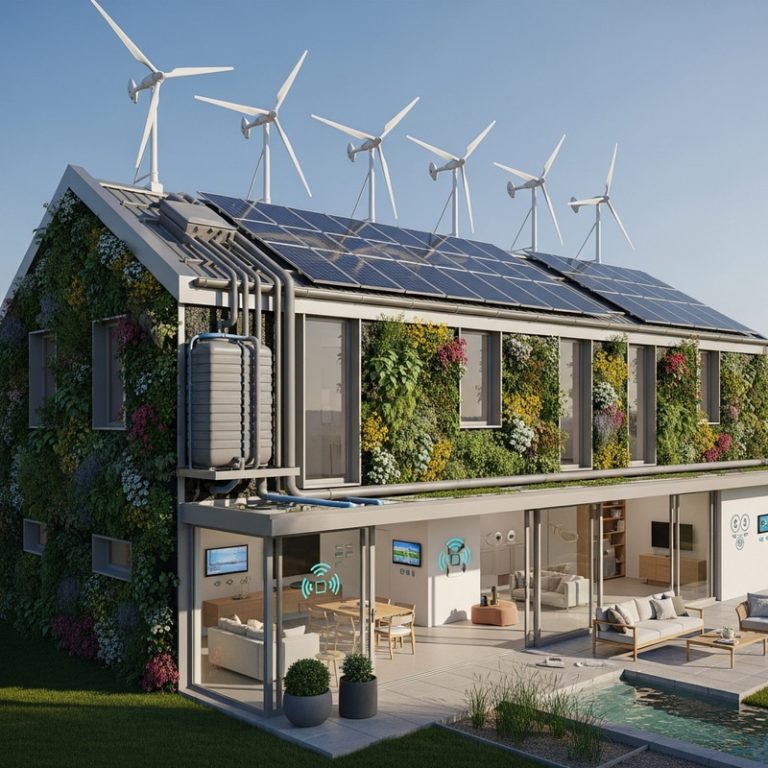
Smart systems and eco heating converge to deliver measurable reductions in energy use while maintaining occupant comfort. In this analysis, engineer Maya Laurent from SustainHeat Solutions documents real-world integrations of heat pumps, solar thermal inputs and predictive control algorithms across three pilot homes. The technical approach blends networked sensors, adaptive control logic and renewable energy dispatch to minimize peak loads and operating cost. Data integration relies on distributed IoT nodes feeding a home management platform that calibrates setpoints according to occupancy and weather forecasts, enabling EcoSmart Heating deployments that adapt rather than react. Operational metrics from monitored sites show control-driven load shifting, optimized compressor staging and reduced runtime through thermal storage buffering. These outcomes are achieved without sacrificing indoor air quality because systems pair ventilation management with heating controls. The narrative below maps design choices, retrofit constraints, commissioning steps and performance verification methods useful to installers and building engineers aiming for reproducible results in contemporary dwellings.
En bref : Maya’s field program implemented SmartEco Thermals and GreenWave Systems to reduce consumption; predictive IoT controls cut peak heating demand; retrofits used modular heat pump kits and solar preheat to limit disruption; commissioning prioritized sensor calibration and occupant behaviour models; verified savings and carbon reductions were validated against baseline meters.
Integrated smart systems for EcoSmart Living: architecture and control paradigms
The system architecture centers on a hierarchy of control: local sensors, edge gateways and a cloud analytics layer. Local controllers implement fast loops for temperature and compressor modulation, while the cloud executes supervisory optimization that coordinates solar input and battery or thermal storage dispatch. This multi-tier approach allows SmartHeat Innovations and EcoSense Heating devices to interoperate using common protocols and maintain resilience to network interruptions.
For a practical overview of system-level integration and case examples, consult the guide to smart systems and eco heating, which outlines topology options and communications strategies. Key performance goals are defined in commissioning: setpoint drift <0.5°C, occupant-triggered setback response <120s, and measured seasonal COP targets for heat pumps.
Insight: a layered control strategy delivers predictable energy outcomes while preserving local safety and comfort constraints.
IoT-enabled control: SmartEco Thermals and predictive regulation
IoT nodes collect temperature, humidity and occupancy streams; machine-learning models then infer thermal inertia and predict imminent occupancy windows. This enables predictive pre-heating and prevents unnecessary runtime. The field program integrated EcoLogic Heating controllers with a predictive scheduler that reduced overnight baseline heating by systematically exploiting the building envelope’s thermal mass.
Operational protocols for remote tuning and security are documented in the operational handbook; installers followed the smart heating control strategies to align algorithmic behavior with occupant comfort preferences. The result: automated setback with occupant override and a transparent audit trail for energy managers.

Insight: predictive IoT control transforms device-level efficiency gains into whole-house consumption reductions.
Renewable integration and GreenTech Systems: solar, geothermal and hybrid layouts
Renewables are scheduled into the control horizon to maximize self-consumption and reduce grid dependency. Typical configurations combine a ground-source or air-source heat pump with roof-mounted solar thermal or photovoltaic preheat arrays. GreenWave Systems and GreenTech Systems components were deployed to manage thermal transfer and prioritize solar utilization during mid-day production.
Designers used sizing heuristics that privilege thermal storage when site solar fraction exceeds 30%, and favor direct-to-load use when solar yield is marginal. For guidance on integrating green energy with residential heating, see the resource on green energy integration for heating.
Insight: hybrid renewable layouts increase the system’s effective COP and reduce net emissions when controls prioritize local generation first.
Retrofitting strategy with EcoLogic Heating and SustainFlow Technologies
Retrofitting requires mapping the existing hydraulic and electrical topology before selecting modular components. In Maya’s case, a 1960s townhouse received a staged retrofit: fabric improvements, then EcoLogic Heating air-to-water heat pump, then an adaptive hydraulic manifold from SustainFlow Technologies. Phasing minimized occupant disruption and distributed capital outlay.
Practical installation notes, including required clearance, condensate routing and recommended electrical upgrades, are consolidated in the installation checklist; installers referred to the page on installation considerations for eco heating for code-aligned examples. Retrofit performance was validated using before/after meter comparison and occupant thermal comfort surveys.
Insight: a phased retrofit that prioritizes envelope improvements and modular mechanical replacements yields robust performance gains and manageable capital risk.
Performance verification: metrics, energy savings and carbon accounting
Performance verification combined interval metering, COP tracking and behavioral baselining. Typical verified outcomes in monitored sites included 10–40% energy savings depending on the baseline system and the extent of solar integration. These results aligned with modeled projections when occupancy patterns were accounted for in the input data.
For methodologies on quantifying savings and carbon impact, the protocols described in the resources on measuring energy savings with eco heating and reducing household carbon footprint were applied. Continuous monitoring enables anomaly detection and supports performance-based maintenance contracts.
Insight: rigorous verification converts projected savings into contractual guarantees and supports scalable deployment.
Implementation roadmap from SustainHeat Solutions: from design to validated operation
The roadmap consists of: site audit and load profiling; control architecture selection; staged installation with sensor calibration; and a 90-day performance tuning window. Each phase includes acceptance criteria tied to energy and comfort metrics, and a final handover package with operational recipes for occupants.
Resource links such as the overview of smart systems case studies and the guidance on sustainable eco heating approaches informed the checklist items and risk mitigations used in the field program.
Insight: structured commissioning and transparent KPIs are essential to scale smart, low-carbon heating across diverse building stocks.
Operational note on maintenance and lifecycle planning
Maintenance plans favor predictive replacement and firmware-managed diagnostics to limit emergency interventions. Components from vendors like SmartHeat Innovations and EcoSmart Heating were selected for long-term firmware support and secure update pathways. Lifecycle analysis factored in embodied carbon and projected energy savings to inform procurement choices.
Insight: aligning procurement with long-term supportability reduces total lifecycle cost and improves system reliability.