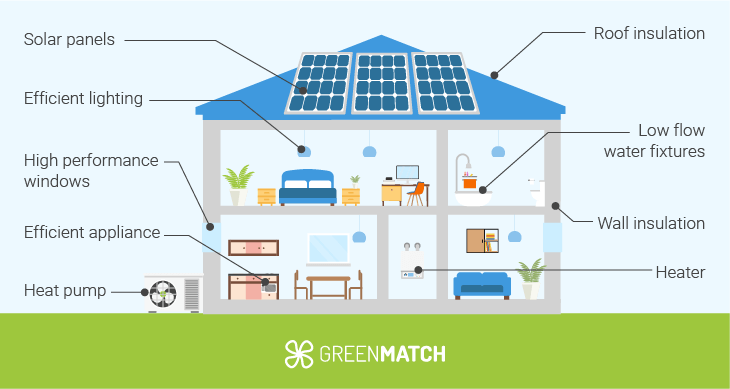
Heating costs and home emissions are converging issues for modern households. In 2025, rising winter energy bills and tighter emissions rules push homeowners to pair efficient heating hardware with renewable power sources. This article examines practical integrations — from air-source and ground-source heat pumps to solar thermal collectors, biomass stoves and deep-water cooling — with a focus on lifecycle cost, grid interaction and policy levers. Using real-world examples and a retrofit thread led by renewable-energy engineer Michael Meon Nwaehiodo, we map pathways to cut operational costs, reduce local pollution and qualify for incentives. Expect technical comparisons, install guidance, and vendor examples such as EcoHeat Solutions and SolarSync Heat that illustrate how systems perform when powered by on-site photovoltaics, community wind, or district geothermal. Strategic insulation and smart controls are treated as prerequisites, not add-ons, because source-side efficiency changes payback and sizing. Read on for actionable design choices that reconcile comfort, capital and carbon targets.
In brief — key takeaways
Energy strategy: Combine efficient heating (heat pumps, hydronic systems) with renewables to minimize running costs; Integration: pairing solar PV or wind with thermal systems cuts grid dependence; Economics: higher upfront costs often offset by incentives and 5–12 year paybacks; Health: hydronic systems reduce airborne allergens; Vendors & tools: consult practical installation and savings guides before committing.
Sustainable home heating integration with renewable energy: technical pathways and benefits
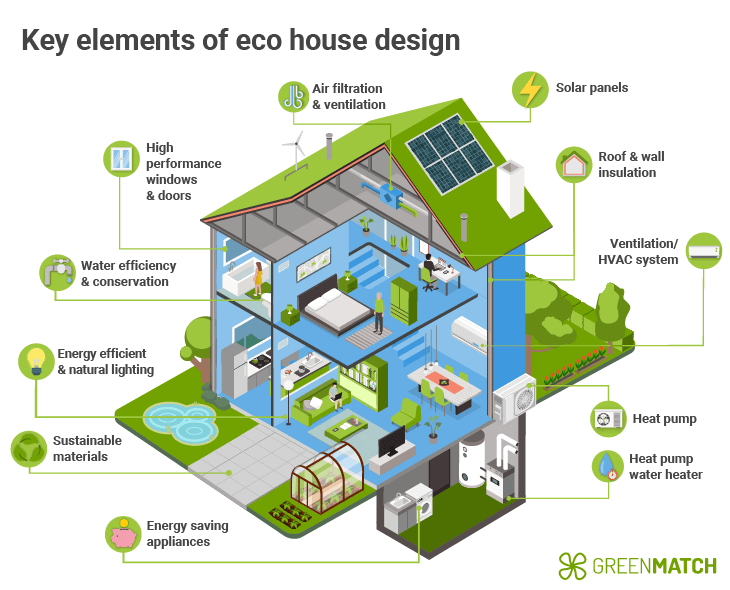
Integrating an eco heating system with renewable generation requires matching thermal demand profiles to variable supply. In practice that means sizing a heat pump or hydronic loop to run during solar production peaks, adding battery or thermal storage, or using wind-generated electricity for overnight charging.
Authority resources provide practical steps for homeowners; for example, detailed install guidance and operational tips are available on the site eco heating installation tips. Key insight: integration reduces total system losses and increases the proportion of heat produced from zero-carbon sources.
Heat pumps and solar: the backbone of renewable-powered heating
Air-source, ground-source and water-source heat pumps
Heat pumps transfer heat rather than generate it, achieving seasonal efficiencies that translate into significantly lower electricity consumption. In moderate climates, owners can expect roughly a 50% reduction in heating-related electricity compared with resistance heating, while ground-source systems can deliver 300–400% seasonal performance (COP 3–4) under optimal conditions.
Companies such as EcoTherm Power and GreenPulse Heating offer packaged units with integrated controls for PV-first operation. For homeowners targeting emissions reductions today, pairing a heat pump with rooftop PV is among the most cost-effective routes. Key insight: choose a heat pump sized for low-temperature distribution (hydronic or large-area radiators) to maximize seasonal COP.
Solar thermal and PV-driven heating
Solar thermal collectors remain efficient for domestic hot water and pre-heating hydronic loops; they can supply up to 70% of annual hot water demand when properly sized. For space heating, active solar systems work best when combined with thermal storage: it evens out diurnal variability and permits greater use of on-site renewable energy.
For guidance on expected energy bill impacts and system planning, consult the practical analyses at how eco heating affects energy bills. Key insight: solar thermal excels where hot water demand is predictable and storage can be cost-effectively deployed.
Biomass, pellet stoves and masonry heaters: modular low-carbon heat
Pellet heating and masonry heaters
Pellet stoves use compressed biomass (wood residues, agricultural by-products) and are compatible with automated feed systems for steady combustion. They are an attractive option where sustainable pellet supplies exist and can be less capital intensive than full hydronic retrofits.
Masonry heaters trap combustion heat in high thermal-mass channels, releasing warmth for 12–24 hours after a short, hot burn and producing fewer particulate emissions than traditional open fires. Vendors like SustainWarm market contemporary masonry designs tuned for low-emission combustion. Key insight: biomass systems can provide resilient off-grid heat if the fuel supply chain and local air-quality regulations are considered.
Wood burners with modern controls
Modern, EPA-certified wood burners combine high thermal efficiency with reduced smoke. They are best used as part of a zoned heating strategy where top-up heat is required and storage or hydronic coupling is available to spread the heat load.
Operational constraints — fuel drying, storage and local air permits — must be accounted for in sizing and lifecycle cost estimates. Key insight: treat advanced wood-burning systems as distributed heat assets, not primary centralized heating in densely populated areas.
Wind, geothermal and deep-water approaches to renewable heating
Wind-powered heating and community turbines
Small-scale turbines can drive resistive heaters or thermal storage tanks when local wind regimes are favorable. Projects that combine a water tank thermal store with turbine generation can convert intermittent mechanical energy into steadier thermal output.
For homeowners in windy regions, modular wind plus storage systems from providers like GreenFlow Energy can reduce dependence on the grid and complement solar production. Key insight: wind-driven thermal systems are site-dependent and require careful resource assessment.
Geothermal heating: ground-source systems and district loops
Geothermal (ground-source) heat pumps use the earth’s stable subsurface temperature and deliver high COPs, making them one of the greenest options available. Although up-front costs are higher — often mitigated by tax credits and incentives — payback horizons commonly fall within 5–12 years depending on energy prices and incentives.
Large scale deployments and district geothermal loops reduce per-unit costs and are being piloted in several municipalities in 2025. Key insight: geothermal delivers consistent performance and long service life, making it a strategic investment for long-term decarbonization.
Hydronic systems and smart control: efficiency at the distribution level
Hydronic distribution — circulating hot water through floor loops or radiators — is inherently comfortable and reduces convective dust. When combined with low-temperature heat sources (heat pumps, solar thermal), hydronic systems maximize system COP and indoor air quality.
Smart controls are critical: adaptive thermostats and weather-compensated controllers enable load shifting and PV-first operation. Practical smart-control strategies and monitoring setups are discussed in implementation resources such as smart eco heating and the advanced control guide at smart eco heating 2. Key insight: distribution efficiency and controls determine how much renewable energy actually displaces fossil fuel consumption.
Policy, insulation and lifecycle economics for retrofit projects
Before selecting hardware, prioritize building envelope upgrades: loft insulation, cavity wall fill and airtightness cut demand and shrink required system size. Insulation improves summer comfort as well as winter efficiency, improving the economics of high-capex systems like geothermal.
Government incentives in many jurisdictions in 2025 still make deep retrofits financially viable. For practical rules-of-thumb on expected savings and staged upgrades, see the operational case studies and calculators at energy savings for eco heating and the sustainability overview at sustainable eco heating. Key insight: envelope-first strategies reduce capital risk and accelerate payback timelines for renewable-driven heating systems.
Retrofitting narrative: Michael Meon Nwaehiodo’s suburban pilot
Engineer Michael Meon Nwaehiodo led a retrofit on a 1970s semi-detached house: attic insulation, hybrid PV array, a variable-speed air-source heat pump, and underfloor hydronic loops were installed. He selected SolarSync Heat for collectors and integrated controls from EcoEnergy Comfort to enable PV export control and thermal storage management.
Within 18 months the household halved its winter grid imports and qualified for regional rebates. The project demonstrated how vendor interoperability — e.g., using components from RenewHeat Co. and local installers partnered with PureHeat Renewables — simplifies commissioning and reduces cycles. Key insight: a coordinated retrofit program combining insulation, heat sources and controls delivers predictable savings and greater occupant comfort.
How to choose the right system for your home in 2025
Decision factors include climate zone, available capital, lot space for ground loops or turbines, and local fuel infrastructure. For urban dwellers with limited outdoor space, air-source heat pumps plus PV and a hydronic retrofit are frequently the best balance of cost and impact.
Vendors like EnviroWarm Technologies and GreenPulse Heating now offer pre-scoped packages that simplify decision-making, while independent guides remain essential reading; start with general planning material at Eco Heat Guide and follow up with the detailed energy-bill analysis linked above. Key insight: prioritize demand reduction and modular, interoperable systems to future-proof investments.