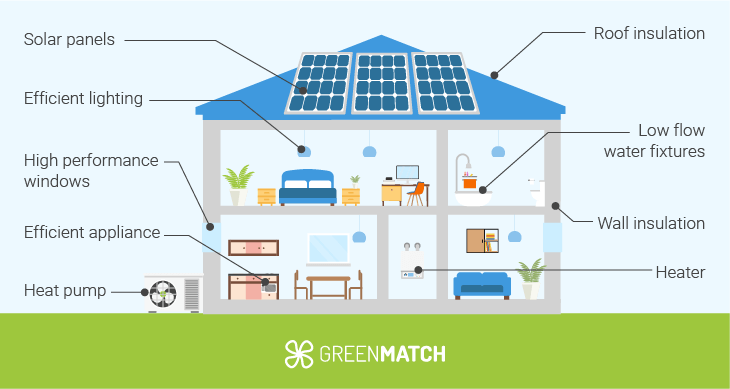
Reducing carbon footprint with eco heating solutions is now a pragmatic engineering challenge rather than a distant ambition. Across Europe and North America, homeowners and small building managers are shifting from fuel-burning boilers to integrated systems that combine high-efficiency hardware, smart controls and renewables. In this article a homeowner named Alex follows a retrofit path that mixes geothermal heat pumps, solar thermal collectors and targeted envelope upgrades to cut fuel use and operating cost. The technical trade-offs are clear: higher upfront cost, but measurable lifecycle carbon reductions and lower volatility in energy bills when paired with on-site generation and demand management. Practical choices hinge on site constraints — land for loops, roof orientation for collectors, access to sustainable biomass — and on available incentives in 2025 that accelerate payback. We assess seven proven approaches, quantify typical efficiencies, and show how modular combinations driven by brands such as EcoHeat Solutions and SustainHeat Systems deliver both reliability and CarbonSmart Heat outcomes for occupied residences. The narrative follows Alex’s decisions, the engineering rationale, and how each system interacts with building fabric, controls and maintenance regimes.
En bref: Geothermal yields up to 400% COP for efficient year-round service; solar thermal cuts water/heating loads when properly sited; biomass/pellet systems offer renewable dispatchable heat where fuel supply is sustainable; radiant floors increase comfort at lower supply temperatures; HRV recovers up to 85% of ventilation heat; pairing systems with smart controls produces notable energy savings. See technical guidance and policy links for installation and incentives below.
Geothermal heat pumps: site analysis and carbon impact for reducing carbon footprint with eco heating solutions
Ground-source heat pumps use the stable sub-surface temperature as a heat sink/source to achieve very high seasonal performance. Typical water-source systems achieve a coefficient of performance of 3.5–4.0 (meaning 350–400% effective efficiency) in moderate climates, which translates to a sizable reduction in fossil fuel consumption.
From an engineering perspective the primary decisions are loop type (horizontal trenches versus vertical boreholes), ground thermal conductivity testing, and integration with low-temperature emitters like hydronic radiant floors. For practical guidance on comparative performance and incentives consult the technical summaries at sustainable eco heating and implementation tips at eco heating installation tips. Insight: proper ground characterization is the single most important determinant of lifecycle carbon savings.
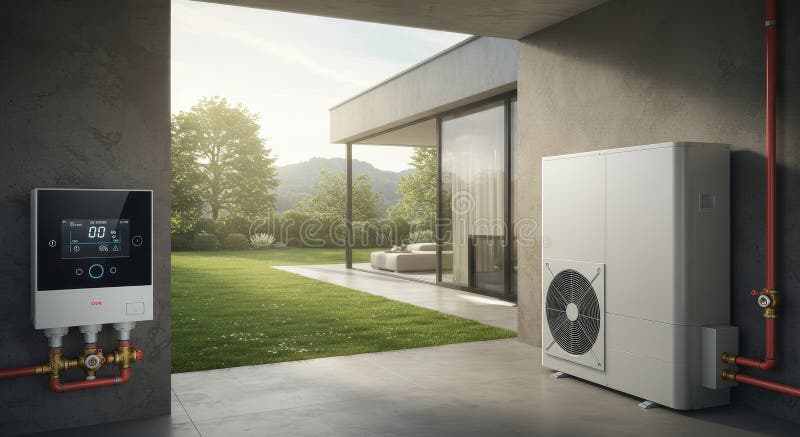
Alex’s geothermal retrofit with SustainHeat Systems: planning, disruption, and outcomes
Alex chose SustainHeat Systems for a suburban retrofit that required two vertical boreholes due to limited yard area. Excavation lasted three days; most disruption was logistical rather than structural.
Measured results after one winter: a reduction of >50% in on-site fossil fuel consumption and a steady indoor temperature with lower peak loads. For design-level checks and expected payback scenarios reference energy savings eco heating. Insight: upfront disruption is offset by quieter operation, long equipment life and consistent carbon reductions.
Watching a field installation clarifies sequencing: loop drilling, grout curing, and commissioning of controls are discrete phases that influence schedule and budget. Insight: commissioning rigor determines real-world COP.
Solar thermal systems and hybrid configurations to reduce carbon footprint with eco heating solutions
Solar thermal collectors convert sunlight into heat for domestic hot water and space heating preheat circuits. When designed with appropriate storage and controls, a solar thermal array can supply a significant fraction of winter preheat demand in sunny temperate climates, reducing reliance on backup boilers.
Practical design decisions include tilt and azimuth optimization, choice of flat-plate versus evacuated-tube collectors, and the sizing of buffer tanks. For a concise review of market options and subsidy programs consult green energy heating and the benefits overview at benefits eco heating. Insight: combining solar thermal with heat pumps or biomass creates a dispatchable, low-carbon heating stack.
Smart controls and EcoHeat Solutions for demand-optimized solar use
Integrating solar thermal with predictive controls reduces pump energy and improves utilization. Alex used an open-protocol controller from EcoHeat Solutions that prioritizes solar preheat, then pulls from the geothermal loop as needed.
This arrangement reduced auxiliary energy use in shoulder seasons and flattened peak demand. For smart system strategies see smart systems eco heating and controller recommendations at smart eco heating. Insight: intelligent sequencing often delivers the largest marginal gains at low incremental cost.
Biomass heating, pellet stoves and radiant floor systems: balancing renewability and practicality in eco heating
Biomass boilers and pellet stoves burn sustainably sourced organic fuel to provide dispatchable heat. Fuel sustainability and logistics determine true carbon neutrality; regionally sourced wood pellets or chips that follow sustainable forestry standards can deliver low lifecycle emissions.
Pellet stoves often achieve ~85–90% combustion efficiency with automated feeding and low ash. For operational costs and comparative economics review eco heating energy bills and lifecycle comparisons at benefits of eco-friendly heating systems. Insight: biomass is most effective where continuous, reliable low-carbon fuel supply is assured.
Radiant floor heating and pairing with low-temperature sources like EcoFlow Thermal
Radiant floor systems distribute heat uniformly and permit lower supply temperatures, which improves heat pump and solar thermal efficiency. Hydronic systems paired with EcoFlow Thermal manifolds reduce distribution losses and improve control granularity.
In retrofits Alex replaced radiators with underfloor loops in two high-use zones, enabling the geothermal system to run at a lower, more efficient temperature. For efficiency modeling and retrofit advice consult eco heating systems. Insight: emitter selection dictates achievable system COP and occupant comfort.
Ventilation, controls and lifecycle thinking: holistic measures to further reduce carbon footprint with eco heating solutions
Heat recovery ventilation (HRV) recovers up to 85% of exhaust heat while improving indoor air quality. Coupling HRV with zoned controls and adaptive scheduling reduces wasted heating energy and prevents moisture-related fabric deterioration.
Brands in the market — from GreenWave Heating to EcoTherm Innovations — now supply integrated packages that combine HRV, smart thermostats and analytics for demand response. For policy-driven rebates and practical installation checklists see eco heating greener planet and energy savings eco heating 2. Insight: ventilation and controls often deliver short payback and immediate comfort gains.
Operational example: Alex monitors carbon and cost with CarbonCut Heating analytics
After commissioning, Alex used a dashboard from CarbonCut Heating that aggregated metered electricity, pellet deliveries and solar yield to produce weekly carbon and cost reports. This visibility enabled schedule tweaks that reduced peak auxiliary heating by 12% in the first winter.
Such feedback loops are low-cost and high-impact when combined with behavioral adjustments and minor envelope upgrades. Insight: transparent metering and analytics are catalysts for optimized operation and ongoing carbon reductions.
Across the systems described, vendors and integrators such as EcoPulse Heat, PureEarth Heat and EcoTherm Innovations illustrate market maturity: modular products, documented installation pathways and service networks that simplify adoption. For broader market context and consumer-facing guidance visit Eco Heat Guide and practical benefits pages like eco heating green energy. Final practical insight: combining multiple low-temperature sources with targeted controls and envelope improvements achieves the greatest carbon reduction per dollar invested in residential settings.