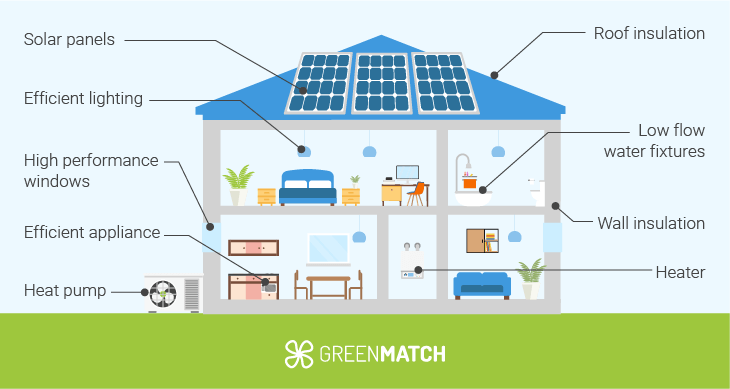
Heating costs spike every winter, and by 2025 many households still face volatile utility bills despite advances in renewables. This step-by-step eco heating guide frames practical decisions — from simple insulation and control upgrades to system swaps — around measurable savings, lifecycle emissions and real-world payback. Follow the story of Alex, a mid-size homeowner who partners with local installers and consults firms such as GreenStep Energy and EcoHeat Solutions to move from an aging oil system to a hybrid solution combining a heat pump with solar-assisted hot water. We quantify choices: upfront cost, estimated payback, maintenance profile and carbon reduction. We also show how incremental moves — loft insulation, optimized controls, and a phased equipment replacement — cut bills immediately while preparing the house for higher-efficiency heat sources. Technical trade-offs are explicit (COP, seasonal performance, integration complexity) and each recommendation links to practical guidance for procurement, installation and monitoring. Expect procedural checklists, case-based estimates and vendor-agnostic decision rules that you can apply room-by-room. The guide prioritizes interventions by cost-effectiveness and resilience, helping homeowners decide what to do this winter vs what to plan over a 5–10 year horizon. Actionable insight: start with the building envelope, then layer efficient generation and smart controls for predictable, long-term savings.
En bref: Insulation first to cut immediate heat loss; Measure (energy audit) before replacing equipment; Prefer heat pumps where grid decarbonization allows; Combine solar thermal or PV with hydronic systems for hot water savings; Use smart controls to realize up to 20% operational savings; Phase investments (upgrade envelope → controls → generation) to spread costs; Validate contractor proposals with performance metrics (COP, SCOP, flow temps); Maintain systems annually to protect efficiency.
Step-by-step eco heating guide: prioritizing insulation and measurement
Most retrofit strategies fail when the envelope is ignored. A typical household waste identified in 2025 audits still shows leak paths at lofts, uninsulated cavity walls and poor draught-sealing; the US Energy Saver program historically shows how DIY sealing and insulation reduce bills substantially. Start with an energy audit and thermal imaging to map losses, then address loft insulation, cavity-fill and airtightness in that order.
Alex began with a targeted loft upgrade that reduced peak heat loss and lowered the required sizing for a subsequent heat pump — reducing capital cost. For procedural guidance on incremental work and expected savings, consult the practical measures described in the home heating upgrades brief and the energy-saving measures overview. Key insight: insulating first often shrinks the necessary capacity of a new system, improving efficiency and cutting lifecycle emissions.

Stepwise deployment of heat pumps and geothermal systems — RenewHeat Guide
Air-source and ground-source heat pumps: technical trade-offs and payback
Heat pumps transfer rather than generate heat. Air-source units are easier to retrofit and cost less upfront; ground-source systems deliver higher and steadier efficiency (often cited as 300–400% seasonal performance for geothermal) but require more civil works. In moderate climates, switching from electric resistance or an old oil boiler to a heat pump commonly halves effective heating electricity demand when distribution temperatures are optimized.
Alex compared quotes using explicit metrics: COP at design temperature, seasonal coefficient (SCOP), and required flow temperatures for existing radiators. For integration steps and smart staging, review the control strategies in the smart heating controls guide. Key insight: optimize radiators or install low-temperature hydronic panels to exploit the full efficiency of a heat pump.
Geothermal considerations: site, cost and long-term returns
Geothermal systems need suitable land or drilling rights and a competent design; upfront costs are higher but payback periods commonly fall within eight years under typical 2025 electricity and incentive regimes. Technical risks include ground-loop sizing and thermal interference; reservoir management matters for large arrays.
Alex chose a closed-loop ground-source option after a soil survey; the installer modelled long-term loop temperature. For deployment checklists and installer vetting steps see the installation resource at professional installation guidance. Key insight: when land and capital permit, geothermal often delivers the lowest lifecycle emissions per unit of heat.
Solar, pellet and biomass options: hybrid patterns for resilient supply
Solar thermal and PV-hybrid heating systems
Solar thermal collectors can supply a large share of domestic hot water demand — in many systems up to 60–70% annual hot water — when paired with well-sized storage and a heat-pump-assisted backup. Solar PV feeding a heat pump provides flexibility: when onsite electricity is abundant, the heat pump runs at lower marginal carbon intensity.
Practical design: choose hydronic collectors for radiant floor systems and select matched storage capacity. The sustainable heating options page outlines sizing heuristics. Key insight: pairing PV with low-temp hydronics multiplies carbon savings compared with standalone PV or solar thermal alone.
Pellet systems and modern wood burners
Pellet boilers and contemporary wood burners use manufactured fuel from agricultural residues and sawmill waste, offering lower particulate emissions and predictable calorific value versus raw logs. Pellets simplify handling and can be automated for multi-day autonomy.
Alex evaluated a pellet stove for supplementary zoning where retrofit heat-pump distribution was constrained; it lowered fuel import dependence and reduced peak electrical demand. For operational tips and maintenance cycles consult routine maintenance guidance. Key insight: pellet systems can be a cost-effective secondary heat source when sourced from certified suppliers.
Masonry heaters, hydronic systems and wind-assisted heating
Masonry heaters: thermal mass for long-duration heat
Masonry heaters burn wood quickly at high temperature and store heat in masonry, releasing warmth for 12–24 hours. Their slow-release profile reduces frequent firing and produces lower emissions per useful heat hour when properly operated.
Alex considered a masonry heater for a rural studio; the installer demonstrated the internal flue geometry that captures and stores heat. Key insight: masonry heaters are best applied where regular, centralized burns fit occupant behavior and where space constraints allow.
Hydronic floor heating and radiators: the healthiest distribution
Hydronic systems circulate hot water through underfloor circuits, baseboards or radiators. They provide even, draft-free warmth and do not distribute allergens as forced-air systems can. Hydronics pair particularly well with low-flow-temperature heat pumps and solar thermal preheat.
Alex retrofitted downstairs floors with hydronic loops, reducing thermostat setbacks and improving comfort. For practical sequencing of upgrades and expected comfort metrics, read the technical notes on energy-focused retrofits. Key insight: hydronic distribution often yields the best occupant comfort-to-energy ratio in retrofits.
Controls, monitoring and phased economics — Stepwise Energy planning
Smart control systems, zoning and demand-side scheduling are the operational layer that unlocks theoretical efficiency. Advanced thermostatic control, weather compensation and load-shifting can cut operational consumption by double-digit percentages when configured to occupancy patterns.
Alex deployed a multi-zone controller and tied it to a modest PV array so that heating runs preferentially during midday surplus. For stepwise automation approaches and controller selection, consult the smart systems guide and the smart control primer. Key insight: invest in controls early — they reduce payback time on larger capital investments by optimizing runtime and setpoints.
Operational protocols, maintenance and vendor selection
Efficiency degrades without periodic service. A simple annual program — filter change, pump and valve checks, combustion sweep (where applicable) and hydraulic balance — preserves design performance. Manufacturers and installer networks such as EcoFlow Heating, SustainWarm and EcoTherm Savers provide documented maintenance schedules.
Alex set a calendar for annual servicing and verified performance with a seasonal consumption baseline; this habit caught a pump fault before it caused a spike in electric draw. For procurement and technical vetting checklists use the equipment selection notes and the sustainability criteria. Key insight: routine maintenance is a low-cost lever that preserves efficiency and extends equipment life.
Implementing a phased retrofit: the Stepwise Energy roadmap
Phase 1: measure and insulate; Phase 2: install controls and small renewables; Phase 3: replace primary generator with heat pump/geothermal; Phase 4: optimize distribution and monitor. This sequence reduces upfront capital requirements while securing early savings.
Alex followed this roadmap, validated savings at each stage and used performance data to secure better finance terms for later phases. Vendors and schemes such as GreenPath Heating, SustainStep Energy and EcoWise Heating can assist with staged financing and performance guarantees. Key insight: a staged approach turns large capital projects into manageable steps and improves decision certainty.