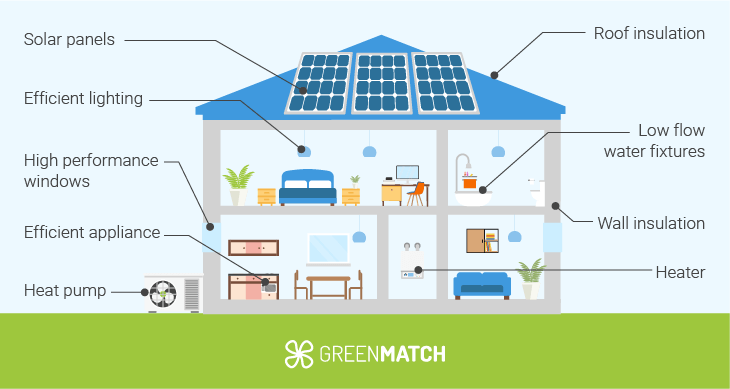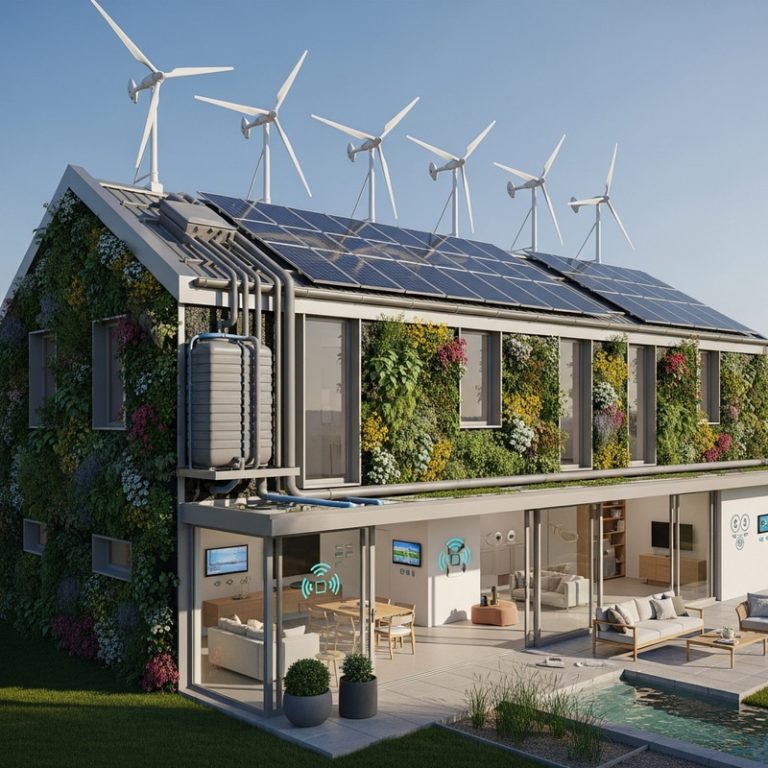
Energy bills and heating choices define household sustainability in 2025. With the average U.S. household still spending more than $2,000 per year on energy, most of it for space conditioning, targeted upgrades now deliver measurable reductions in consumption and carbon output. This report-style overview compresses technical priorities—controls, envelope improvements, efficient HVAC, and renewable coupling—into an actionable sequence that balances upfront cost, operational savings and available incentives. Policymakers and utilities have broadened rebate windows this year, making combined measures (for example, insulation plus a heat pump) materially more affordable and faster to pay back. The argument developed here treats systems as integrated components: control logic first, distribution second, and generation or storage third, and it highlights where installers and homeowners should concentrate effort to maximize eco efficiency.
In brief: Start with an energy audit to locate losses; deploy smart controls to shave HVAC demand; upgrade the envelope before adding generation; prefer heat pumps or hydronic systems for best efficiency; pair rooftop solar with batteries to boost independence and ROI. These are the priority actions that convert investment into performance quickly.
Energy Saving Home Upgrades for Maximum Eco Efficiency: controls to renewables
Technical sequencing matters: a home with poor insulation forces any high-efficiency heating system to work harder. Begin with diagnostics—blower door, thermography and load calculations—to quantify leakage and thermal bridging.
Once losses are mapped, implement a layered approach: air sealing, targeted insulation, efficient windows, then networked controls and finally generation. This reduces system sizing requirements and improves lifecycle economics; installers following this workflow typically report shorter payback periods and higher user satisfaction.
Smart home automation and precise controls to reduce heating load
Smart thermostats and whole-home energy monitors shift heating demand with occupancy-aware algorithms and can reduce HVAC energy by up to 15%. When combined with zoning and smart dampers, additional savings of 10–20% are achievable through targeted control strategies.
Integrating these controls requires interoperable platforms and installer calibration to avoid setpoint conflicts. Practical resources such as the smart control platforms overview explain communication standards, sizing and installer checklists for robust deployments. Key insight: controls unlock efficiency quickly and pay for themselves faster than most mechanical replacements.
High-efficiency HVAC, heat pumps and hydronic systems for sustained savings
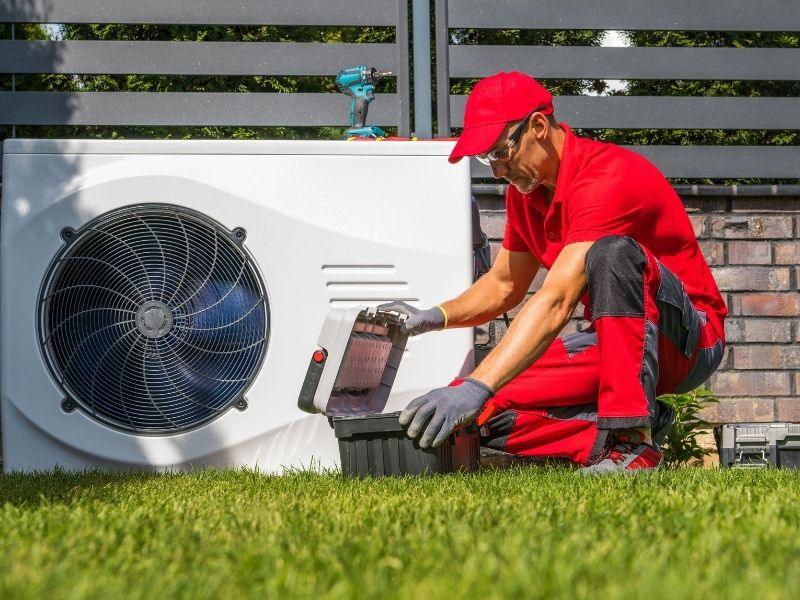
Heat pumps dominate the efficiency conversation because they move heat rather than generate it. Air-source, ground-source (geothermal) and water-source variants are suitable depending on site constraints; geothermal systems report effective coefficients of performance that translate to 300–400% efficiency in optimal installations.
Hydronic heating—radiant floors or copper fin-tube radiators—coupled to condensing boilers, solar thermal or heat pump boilers, offers superior comfort with low fan energy and reduced particulate movement. For detailed system comparisons and lifecycle analyses consult the system performance matrix. Key insight: distribution choice (air vs hydronic) is as important as heat generation for end-use efficiency.
Insulation, air sealing and windows as the foundational upgrade
Envelope interventions are cost-effective: increasing attic and wall R-values and fixing infiltration points commonly reduces heating and cooling expenses by around 20%. Energy modeling identifies diminishing returns so installers can sequence measures for optimal budget allocation.
Window and door upgrades to ENERGY STAR-level units reduce conductive losses and solar gain, typically lowering annual energy use by about 12%. Technical tip: pair high-performance glazing with automated shades and dynamic ventilation to maximize seasonal performance. Key insight: insulating first reduces system capacity needs and improves comfort immediately.
Renewable integration and alternative heat sources: solar, pellets, wind and geothermal
Rooftop photovoltaics plus storage is now a practical generation layer for many homes. Typical residential PV investments fall in the range of $15,000–$20,000 before incentives, with the 2025 federal tax credit commonly at 30%, producing annual savings often between $1,000–$1,800 depending on location and load matching.
Alternative thermal systems—solar thermal collectors, pellet stoves, masonry heaters and small wind coupled to storage—remain viable in specific contexts. Pellet systems provide a low-carbon combustive option where biomass supply chains exist, while masonry heaters can store and emit heat over long periods with reduced emissions versus older wood stoves. For integration strategies and renewable sizing see the renewable energy integration guidance. Key insight: match renewable choice to site resources and load profile to minimize oversizing and cost.
Practical pathway, incentives and a homeowner case study
Consider the case of Maya, a suburban homeowner who started with a professional audit, then sealed the envelope, installed a zoned air-source heat pump and added a modest PV array with a battery. Her sequence reduced peak winter demand, allowed a smaller heat pump, and accelerated payback thanks to combined incentives.
Maya used a local installer following the installation guide and referenced retrofit financing and rebates summarized in the installation tips document. Operational monitoring confirmed a 30–40% reduction in seasonal energy costs and improved comfort metrics. Key insight: follow an audit-led retrofit path and prioritize controls and envelope measures before generation for best ROI.
Sustainability practices and vendor selection for long-term performance
Select equipment and service partners that provide measured performance guarantees, data access and maintenance plans. Terms like EcoHeat Solutions, GreenEnergy Essentials and SustainWarm now appear in vendor offerings; prioritize models with proven field data over marketing claims.
Utility and federal programs updated in 2025 favor bundled projects; consult resources such as the energy savings breakdown and the sustainable heating overview when preparing grant or rebate applications. Final insight: quantify expected savings, require baseline measurement and include ongoing verification in contracts to protect performance.
Keywords and vendor concepts referenced: EcoFlow Heating, PureEnergy Savers, GreenPulse Heating, EarthWise Energy, EcoTherm Innovations, Sustainergy Systems, NatureNest Heating. These represent product classes and integration approaches where technical performance, not branding, should drive selection.