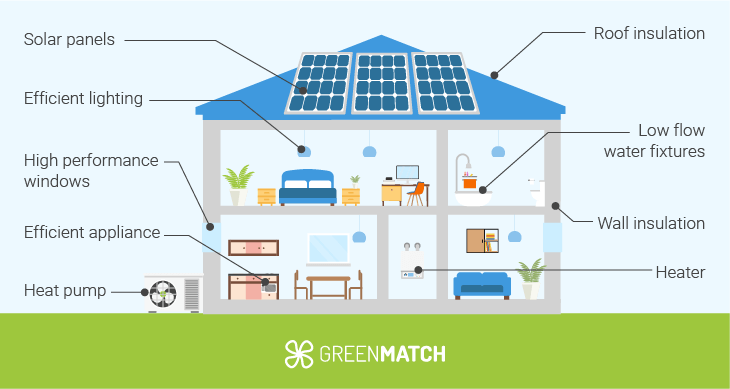
Energy savings unlocked through eco heating technologies is no longer a slogan but an operational roadmap for HVAC businesses and city planners. As heatwaves intensify and cooling demand accelerates, companies like EcoHeat Solutions have pivoted from commodity boilers to integrated heat pump ecosystems, pairing high-efficiency equipment with passive design and digital controls. This shift responds to two converging drivers: regulatory pressure to reduce CO2 and the economic imperative to cut operating expenditure. The UNEP-led Global Cooling Watch and the COP30 discussions in Belém underline the scale of the challenge — cooling demand could more than triple by 2050 under business-as-usual, but a Sustainable Cooling Pathway can cut emissions by 64% relative to that trajectory while expanding access to cooling for billions. For commercial operators, the combination of heat pumps, thermal storage, nature-based urban interventions and smart building controls creates a resilient, low-cost heating and cooling stack. This article follows a fictional mid-sized installer — GreenHeat Dynamics — as it builds a competitive offering around electrification, long-lived equipment and services that monetize energy savings for property owners. The analysis blends technical performance, policy context and practical procurement guidance so that vendors and facility managers can act now and capture the energy savings unlocked by eco heating technologies.
En bref — key takeaways: Heat pumps deliver 300–400% seasonal efficiency; Sustainable Cooling Pathway can reduce projected 2050 cooling emissions from ~7.2 Gt CO2e to ~2.6 Gt CO2e; passive and low-energy measures account for nearly two-thirds of achievable cuts; urban initiatives like Beat the Heat already include 185 cities; lifecycle cost reductions and avoided grid investment enable large commercial savings. For operational guidance, see resources on reduce energy bills, energy savings through eco heating and practical eco heating installation tips.
Energy savings unlocked through heat pumps and smart eco heating systems
Heat pumps change the thermodynamic equation: they move heat instead of generating it. In real-world commercial deployments, air- and ground-source heat pumps deliver 3–4 units of heat per unit of electricity, translating into measurable reductions in fuel consumption and carbon footprints. Companies such as SustainHeat Innovations and EcoTherm Systems now offer packaged solutions that combine high-efficiency compressors with inverter drives and refrigerant management, enabling compliance with tightening HFC phase-down schedules.
For B2B suppliers and installers, the opportunity is twofold: sell equipment and guarantee performance. Service contracts based on measured energy savings allow vendors like EnergySmart Heating and EcoSave Technologies to embed value for building owners. Technical guidance and comparison tools can accelerate procurement — for example, resources that explain eco heating systems and the benefits of eco heating help specifiers quantify returns. Insight: pairing heat pumps with controls is essential to capture the full efficiency potential.

Case study — GreenHeat Dynamics transitions to an electrified service model
GreenHeat Dynamics began as a regional boiler and chiller contractor and, over three years, retooled its offering around electric heat pumps and energy services. The company standardized on products from suppliers such as ThermoEco Energy and SmartEco Heating, trained technicians in refrigerant-safe practices, and introduced performance contracts that guarantee kWh savings to tenants.
This transition reduced the firm’s average call-backs, extended equipment lifecycles beyond 15 years, and lowered total cost of ownership for clients. The insight: early investment in training and digital monitoring converts capital-intensive sales into recurring revenue streams and stronger customer retention.
Passive cooling, urban design and policy: how non-mechanical measures multiply energy savings
UNEP’s Global Cooling Watch shows that nearly two-thirds of the emissions reductions achievable under a Sustainable Cooling Pathway come from passive and low-energy solutions. That means shading, ventilation, reflective materials and urban greening are not ancillary measures — they are core decarbonization levers. The Beat the Heat initiative and the Cool Coalition mobilize municipal action: by 2025 over 185 cities joined local implementation drives to scale micro-parks, cool roofs and green corridors.
For commercial property portfolios, integrating passive measures reduces peak loads and allows downsizing of mechanical systems, which lowers upfront capital and operating costs. Planners and developers should consult guidance on green energy heating and sustainable eco heating to align urban retrofits with building upgrades. Insight: embedding passive strategies in procurement avoids lock-in to oversized, high-emission HVAC systems.
From city policy to site-level practice — procurement and finance pathways
National and municipal policy adoption is uneven; as of mid-2025, 134 countries had integrated cooling into national climate plans, but only 54 had comprehensive policy across passive cooling, minimum energy performance standards and refrigerant transition. This gap creates market opportunities for firms that can deliver turnkey solutions combining retrofits, financing and compliance support.
Products from EcoPower Heat and GreenEnergy Tech can be paired with municipal incentives to lower payback periods. Companies that offer transparent measurement and verification, and that leverage guides on smart systems for eco heating, will outcompete legacy vendors. Final insight: align sales, finance and technical teams early to turn policy gaps into commercial advantage.
Operational resilience: maintenance, longevity and service models that lock in savings
Heat pumps require less frequent maintenance than combustion-based systems because they have fewer wear-intensive components and avoid combustion-related corrosion. Typical commercial units now have service lives of 15–20 years when maintained correctly, cutting lifetime replacement costs for building owners.
Service models from vendors like EcoHeat Solutions and EcoSave Technologies emphasize predictive maintenance, remote diagnostics and refrigerant management to maximize uptime and efficiency. For implementation tips, consult practical resources on energy savings with eco heating and smart eco heating strategies. Key takeaway: a robust service ecosystem is as important as the initial equipment spec for achieving projected energy savings.