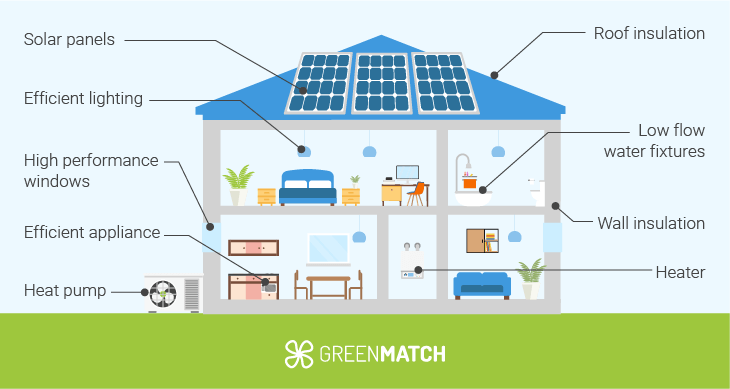
Energy savings through eco heating is becoming a technical and financial priority for homeowners facing persistent utility inflation and tighter emissions targets. Residential heating and cooling still account for roughly 55% of typical household energy use, so upgrading HVAC equipment yields disproportionate gains in both cost reduction and carbon mitigation. Practical packages now combine high-efficiency heat pumps, thermal storage and smart control layers to cut operational demand, recover on investment within a decade, and qualify for federal and state incentives that further improve returns. In real installations, hybrid and variable-speed systems paired with building-envelope improvements typically deliver annual energy reductions in the 20–50% range depending on climate and baseline equipment. This report follows a homeowner case study and breaks down technical options — from ground-source heat pumps and solar thermal collectors to biomass boilers and hydronic radiant floors — showing expected paybacks, maintenance profiles and selection criteria. The objective: equip a homeowner or specifier with clear performance targets, vendor comparisons and integration pathways so the next heating upgrade is both an energy strategy and a resilient asset for the property.
En bref — immediate takeaways: 55% of home energy goes to heating/cooling; targeted HVAC upgrades reduce bills by 20–50%; geothermal and solar thermal offer the largest lifetime savings; smart controls and zoning maximize real-world gains; federal credits and local rebates shorten payback. These points frame the technical guidance below.
How eco heating reduces bills and carbon footprint — technical overview
Heating systems that shift energy source and increase system efficiency reduce both consumption and upstream emissions. Modern air-source and ground-source heat pumps reach seasonal efficiencies that translate to 30–70% lower heat-generation energy per useful BTU compared with conventional electric resistance or older gas furnaces.
Lower demand on generation reduces plant emissions and grid stress; non-ozone-depleting refrigerants and advanced controls cut leakage and off-cycle losses. For builders and retrofits, pairing envelope improvements with system upgrades is essential to realize the full savings potential. Insight: prioritizing system COP/HSPF/SEER performance metrics during selection delivers predictable operational savings.
Case study: Anna’s retrofit with EcoHeat Solutions and GreenWave Energy
Anna, a 40-year-old homeowner in a mixed-climate region, replaced a 15-year-old gas furnace and single-stage AC with a hybrid package sourced from local providers including EcoHeat Solutions and consultation from GreenWave Energy. The scope combined a cold-climate air-source heat pump, upgraded duct sealing, and a smart thermostat to enable zoning.
Post-install metrics showed a measured reduction of ~35% in annual heating-and-cooling energy compared with baseline billing, with immediate comfort improvements and lower peak loads. She captured utility rebates and a state incentive that trimmed upfront cost and shortened projected payback to under 7 years. Insight: pairing high-efficiency equipment with prioritized envelope fixes and incentive capture is the fastest route to reliable ROI.
Major eco heating technologies: performance, cost and use cases
Geothermal (ground-source) heat pumps offer the most consistent COP across seasons and typically deliver the largest lifetime savings. Typical installations show operational savings between 30–70% compared to fossil systems, long component lifespans, and eligibility for significant tax credits.
Air-source heat pumps, including ductless mini-splits and cold-climate models, are lower-cost to install and now achieve reliable operation deep into subfreezing temperatures. Solar thermal and hybrid solar-electric systems reduce water and space-heating loads 50–80% when properly sized and paired with thermal storage.
Biomass boilers and pellet systems provide a near-carbon-neutral option where sustainable feedstocks are available, with modern units achieving >70% combustion efficiency and drastically reduced particulates. Radiant hydronic floors and phase-change materials increase delivered comfort while reducing thermostat setpoints and cycling losses. Insight: match technology selection to fuel availability, land constraints and expected maintenance capacity to optimize lifecycle cost.
Comparative economics and incentives in practice
Upfront costs vary widely: air-source heat pump retrofits often run in the low thousands per zone, geothermal systems commonly fall in the $18,000–$45,000 range, and solar thermal arrays typically land between $7,000–$15,000. Despite higher initial capital, federal clean energy credits and many state rebates cover a meaningful fraction of expenses.
Operational savings and lower maintenance accelerate payback; geothermal often reaches ROI in 5–10 years, while solar thermal and advanced biomass systems typically achieve payback inside 7–12 years depending on local energy prices. For procurement and detailed cost modeling, consult the energy savings guide and local incentive portals before signing contracts. Insight: lifecycle cost modeling that includes incentives and avoided fuel price volatility is the decisive analysis tool for homeowners.
Smart controls, integration and maximum operational savings
Smart thermostats, zone control and app connectivity materially increase realized savings by reducing wasted conditioning in unoccupied spaces. Systems that include learning algorithms and geofencing can shave as much as an extra 8–12% from annual energy use when tuned to occupant patterns.
Integration platforms allow heat pumps, PV arrays and storage to operate in coordinated modes: for example, prioritizing thermal loads during midday PV production or dispatching stored heat during evening peaks. For technical guidance on system-level integration, review best practices at smart system integration and the implementation notes at installation best practices. Insight: effective controls turn theoretical efficiency into measurable bill reductions.
Vendors, product lines and procurement considerations
When comparing suppliers, evaluate declared performance metrics (SEER2, HSPF2, AFUE), warranty terms, and documented field performance. Brands such as EcoTherm Innovations, SustainHeat, EcoSmart Heating and EnergyWise Heating offer differing tradeoffs between modularity, integration and price.
Other players like GreenPulse Heating, EcoVentures Heating, PureEnergy Heat and EcoSavings Heating provide packages that bundle financing and maintenance plans—useful for homeowners prioritizing predictable lifecycle costs. Request measured performance data from installers and reference local case studies before final selection. Insight: vendor selection requires evaluating real-world data and post-install support as much as nominal efficiency numbers.
Choosing the right system for your climate, home and budget
Decision criteria must include climate zone, available land or water for ground loops, roof orientation for solar collectors, existing ductwork condition, and local fuel/biomass supply chains. Cold climates often favor ground-source systems or cold-climate air-source units, while sunny regions can maximize solar-thermal or hybrid solar-electric architectures.
Assess building fabric first: improving insulation, sealing and window performance reduces required system size and improves economics. For actionable retrofit pathways and homeowner checklists, see the practical steps in the reduce energy bills resource and the comprehensive overview at sustainable HVAC options. Insight: sizing and envelope work are as critical as equipment choice for delivering projected savings.
Final operational and maintenance considerations
Maintenance profiles vary: geothermal systems generally require low annual service and long indoor component lifespans, while biomass systems need regular ash removal and fuel handling. Plan for annual inspection, filter changes and software updates for smart controls to preserve warranty coverage and performance.
Document commissioning results and meter baseline consumption before and after installation to validate savings and satisfy incentive requirements. For step-by-step install and commissioning tips consult the field guide at installation tips and the control strategy notes at smart systems efficiency. Insight: documented commissioning and a defined maintenance schedule are essential to lock in long-term savings and system reliability.