Eco heating maintenance tips for continued energy savings sits at the intersection of technical rigour and everyday practicality. In the story that follows, Maya — a homeowner in Seattle who works as an urban planner — treats her heating system like an urban project: diagnosis, phased upgrades, and routine audits. Over a winter season she tracked consumption, replaced parts, and evaluated renewables; the result was measurable: lower bills and fewer unexpected breakdowns. This article synthesizes those observations into an operational playbook that balances short-term fixes and long-term investments, all aimed at preserving comfort while shrinking carbon output. Expect actionable maintenance steps, equipment-spec guidance, smart-control strategies, and integration notes for solar or heat-pump systems. Each section closes with a concise technical insight to guide immediate decisions and to inform conversations with contractors or companies such as EcoHeatPro and EnergyWise Heating. If your objective is sustained energy savings without sacrificing reliability, the ensuing sections provide the roadmap: simple routines that prevent waste, upgrades that pay back over years, and behavior changes that compound savings.
En bref — filter discipline (change every 30–90 days); thermostat control (programmable/SMART scheduling); air-sealing & insulation (reduce demand at source); annual professional tune-up (diagnose combustion, refrigerant, motors); renewable pairing (solar + heat pump for steep emission cuts). These priorities map directly to lower consumption, longer equipment life, and clearer decisions when choosing contractors like GreenWarm Solutions, SustainHeat Experts, or GreenFlow Heating.
Eco heating maintenance checklist for sustained energy savings
Begin with a compact, repeatable checklist that Maya used across seasons. First, verify airflow: inspect and clear registers and the area around indoor units. Second, maintain filtration: select an appropriate MERV-rated filter and adhere to a replacement cadence.
Third, confirm combustion health where applicable: an evenly blue furnace flame and annual carbon monoxide testing are critical safety and efficiency checks. Finally, record metrics: energy bills, thermostat setbacks, and runtime hours to detect drift over time. These simple steps are the backbone of any program meant to deliver long-term savings and are widely endorsed by industry standards such as Energy Star-oriented practices on efficient maintenance.

Key insight: Regular, short maintenance cycles prevent the large-effort interventions that erode both savings and system life.
Airflow, filter strategy and indoor air quality
Airflow is the first-order determinant of system efficiency. Blocked vents or a clogged filter increase fan runtime and reduce heat transfer, raising consumption. Choose filters with a MERV 7–13 rating for a balance of particle capture and minimal pressure drop.
Implement a routine: replace or clean filters every 30–90 days depending on occupancy, pets, and local air quality. For case evidence, Maya reduced blower runtime by 12% after moving from a low-grade pleated filter to a properly sized MERV 8 element and strict replacement scheduling.
For technical guidance on selecting filters and balancing filtration with system load, consult resources on efficient installations and upgrades, such as eco heating installation guidance.
Key insight: A clean, correctly rated filter is a low-cost control that yields immediate efficiency gains and improves indoor health.
Smart controls and programmable thermostats to cut runtime
Temperature control is where behaviour meets technology. Programmable and SMART thermostats reduce wasted heating by aligning setpoints to occupancy patterns and learning household routines. Maya installed a SMART controller and observed smoother cycling and a measurable drop in degree-hours during unoccupied periods.
Use schedules to exploit setback strategies safely; avoid aggressive overnight temperature swings that force long recovery cycles. If integrating with zone dampers, validate that sensor placement reflects typical occupancy and avoid thermostat exposure to direct sunlight or heat sources.
For deeper integration strategies and smart system options explore materials on smart controls and energy-efficient systems at smart systems for eco heating and smart eco-heating approaches.
Key insight: Properly configured smart controls reduce unnecessary runtime without compromising comfort; they pay back faster when paired with good building envelope performance.
Sealing leaks, insulation upgrades and duct integrity
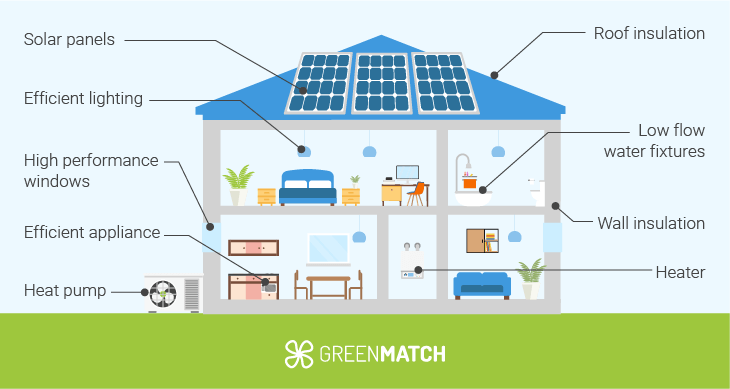
Address the building first: gaps around windows, uninsulated attics, and leaky ducts create persistent thermal demand. Maya prioritized attic insulation and professional duct sealing, which cut her system run time significantly during peak cold spells.
Sealing ducts using mastic or certified tapes and verifying with a pressure test reduces distribution losses. Insulation upgrades in attics and accessible walls lower the seasonal load and prevent short-cycling of modern heat pumps or furnaces.
For strategies that connect building envelope upgrades to HVAC choices, see recommendations on sustainable heating and long-term upgrades at sustainable eco heating and specific energy-saving upgrade paths at eco heating energy savings.
Key insight: Reducing demand at the source yields the highest return: each insulation or sealing measure proportionally lessens HVAC runtime and maintenance stress.
Renewables and efficient equipment: solar, heat pumps and system upgrades
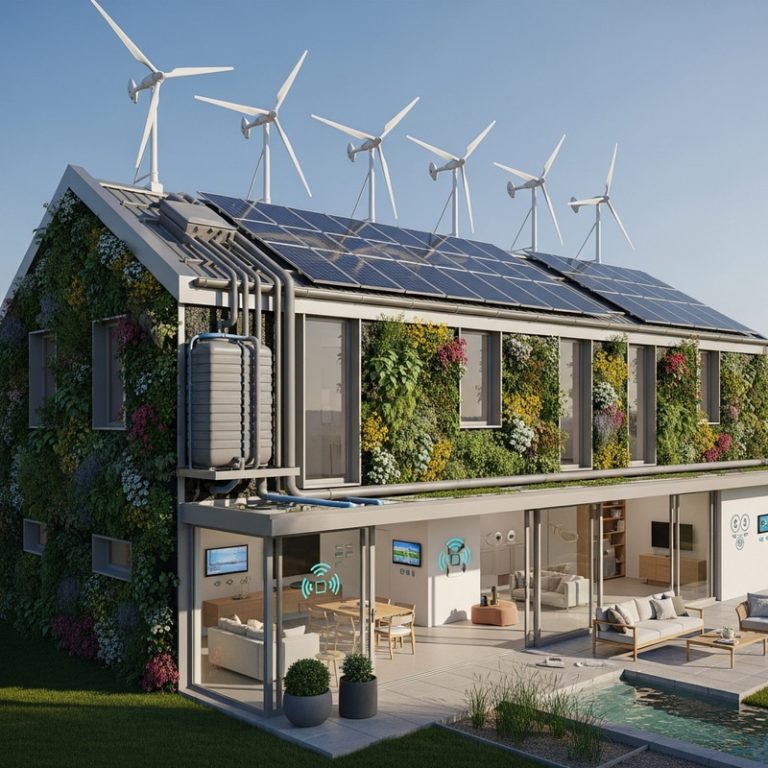
Pairing renewables with efficient equipment magnifies savings. Maya installed roof-mounted panels sized to offset heat-pump electricity during shoulder seasons and selected a variable-speed heat pump for year-round efficiency. The result: lower grid dependence and smoother load profiles.
When selecting equipment, prioritize variable-speed compressors and units with strong seasonal performance (HSPF/SEER). Use professional assessment to align system capacity with envelope improvements to avoid oversized units that short-cycle.
Explore retrofit pathways and green energy options at green energy heating resources and review deployment strategies for combining solar with HVAC at eco heating and green energy.
Key insight: Efficient machines driven by low-carbon electricity offer the fastest route to deep operational emission reductions when matched to a tightened building shell.
Professional tune-ups, warranties and lifecycle planning
Annual professional service remains indispensable. Technicians clean condensers and coils, inspect burners and heat exchangers, check refrigerant charge, and verify electrical connections — all actions that maintain peak efficiency. Maya schedules a certified technician every year in autumn to prepare for winter demands.
Maintain warranty validity by following manufacturer maintenance schedules and documenting service. For replacement planning, consider that most systems reach the end of economic life between 15–25 years; plan capital upgrades accordingly to maximize lifecycle efficiency.
For provider selection and maintenance plans that emphasize efficiency, see program details and professional service models at eco heating systems and upgrade checklists at eco heating upgrades.
Key insight: Documented annual service preserves efficiency, maintains safety, and protects warranty coverage — the combination that minimizes lifecycle cost and environmental impact.
Operational behaviors, vendors and examples from the field
Maya’s case highlights how operational tweaks and vendor choice interact. When she consulted with local contractors — including firms comparable to EcoTemp Maintenance, EcoSmart Heating, and GreenGuard Maintenance — she used three criteria: measured savings estimates, documented references, and clear maintenance schedules. That selection process reduced installation surprises and aligned expectations.
Behavioral changes also matter: modest thermostat setbacks, consistent filter discipline, and seasonal pre-checks delivered cumulative savings. Vendors that provide performance reporting and follow-up service plans, akin to offerings by EcoEnergy Savers, PureWarm Services, and SustainHeat Experts, simplify long-term optimization.
Key insight: Combine disciplined operations with selective vendor partnerships to convert maintenance into persistent reductions in energy use and cost.