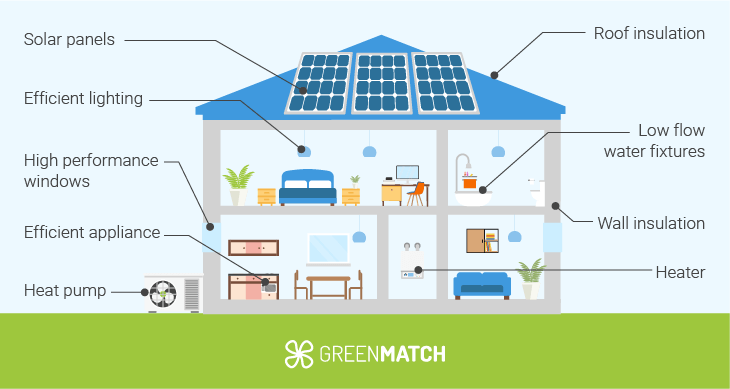
Homeowners facing rising bills and tighter emissions targets are increasingly turning technical scrutiny toward their heating systems. In this in-depth report we track a retrofit project led by a homeowner, Alex, who partners with contractors from EcoHeat Solutions and consultants at GreenEnergy Systems to reconfigure a 1920s townhouse for net-zero-ready performance. The dossier evaluates system-level choices — from air-source heat pumps and ground loops to solar thermal, biomass options and micro-wind — and quantifies how integration, controls and distribution affect real-world performance.
Analysis combines measured building heat loss, local climate data, and lifecycle cost models to compare options on efficiency, embodied carbon and operational cost in 2025 market conditions. Technical trade-offs are foregrounded: capital expenditure, predicted Coefficient of Performance (COP), maintenance regimes and grid-interaction for on-site generation. The objective: deliver a practical specification that reduces fossil fuel dependency while preserving occupant comfort and lowering total cost of ownership.
The narrative follows decisions, tests and outcomes so readers can map the same logic onto their homes. Alongside system recommendations we reference best-practice resources and installation guidance to shorten the learning curve for retrofit teams and homeowners alike.
En bref — quick technical highlights — Heat pumps often deliver the best efficiency per kW of electricity; Solar thermal and PV reduce operational emissions when sized correctly; Geothermal gives steady COP across seasons; Hydronic radiant distribution lowers flow temperatures and reduces losses; Smart controls and demand optimization cut wasted energy and improve user experience.
Evaluating site constraints and load: how to choose the right green heating option
Start with a measured heat-loss calculation and a survey of available on-site renewables. Alex’s retrofit included thermal imaging, blower-door testing and a room-by-room heat-loss spreadsheet to set baseline thermal demand.
Decisions hinge on three parameters: annual heating load, available site area for collectors or boreholes, and electrical capacity) for heat pumps or PV export. Feeding these into a lifecycle model reveals which system meets both carbon and payback targets. Insight: a rigorous site analysis reduces costly oversizing and mis-specified equipment.
Air-source and ground-source heat pumps: sizing, COP and grid interactions
Modern heat pumps achieve seasonal COPs commonly between 3.0 and 4.5 under sensible design; cold-climate models sustain higher performance at low ambient temperatures. For Alex, an inverter-driven air-source unit combined with a small buffer tank balanced dynamic loads and delivered predictable cycling behavior.
Design notes: oversize for low-speed operation rather than peak capacity, include low-temperature emitters such as underfloor heating or large radiators, and assess electrical supply upgrades. Complementary PV reduces net electricity draw; integrated storage smooths peaks. Final insight: correct matching of distribution temperature to heat pump capability is decisive for efficiency.

Solar options: thermal collectors vs PV + heat integration
Solar thermal provides direct heat to domestic hot water and low-temperature hydronic circuits with minimal conversion losses. When paired with a heat pump, solar thermal can preheat buffer tanks and raise system COP during shoulder seasons.
PV-driven resistive heating or heat-pump operation offers a simpler integration path; smart controls favor heat-pump dispatch during high PV production to maximize self-consumption. For implementation details and hybrid strategies, consult the practical guidance on renewable integration for home heating. Key insight: hybrid PV + thermal arrangements improve annual renewable fraction and reduce payback time.
Geothermal systems and ground-source loops: performance and installation considerations
Ground-source heat pumps (GSHP) provide stable source temperatures and high COP year-round, especially for homes with continuous heating demand. Alex’s team evaluated horizontal trench fields against vertical boreholes; geological conditions and land availability drove the decision toward vertical bores.
Installation factors: drilling costs, grout thermal conductivity, and loop-field design determine system longevity and seasonal performance. For technical installation best practices, reference the field guidance at installation resources. Final insight: upfront civil works are large but amortize through consistent efficiency gains.
Biomass and pellet systems: emissions, sourcing and control
Modern biomass boilers and pellet stoves can be efficient and low-carbon when fuel is sustainably sourced and systems include automated feed and emissions controls. For properties without adequate space for large renewables, a pellet boiler provides dispatchable heat and DHW backup.
Operational constraints include ash removal, fuel logistics and local air-quality regulation compliance. Where sustainable supply chains exist, biomass can meaningfully reduce fossil fuel use. Practical insight: pair biomass with thermal storage and smart controls for temporal flexibility and cleaner combustion cycles.
Hydronic radiant heating and distribution: maximizing low-temperature operation
Hydronic radiant systems distribute heat at lower water temperatures, which improves heat pump efficiency and reduces distribution losses. Alex upgraded to wide-area underfloor loops in primary living spaces and oversized radiators in legacy rooms to maintain comfort.
Control strategy: zoned thermostats and weather-compensated curve settings optimize flow temperatures against external conditions. Insight: low-temperature hydronics are central to unlocking the full efficiency of renewables-driven heat sources.
Small wind turbines and hybrid microgeneration for windy sites
Micro-wind can offer complementary generation in coastal or hilltop locations where wind regimes are favorable. Small horizontal-axis turbines feed on-site loads or charge thermal buffers when coupled with power electronics.
Economic viability requires consistent average wind speeds and correct siting to avoid turbulence. When present, wind generation increases resilience and reduces grid dependence. Insight: wind is a niche but valuable adjunct to solar and heat pumps in the right geography.
Smart controls, monitoring and operational optimization
Smart thermostats, predictive scheduling and home energy management systems orchestrate generation, storage and loads to minimize costs and emissions. Alex deployed a controller that prioritizes heat-pump operation during PV surpluses and enables remote diagnostics.
Use resources on smart controls and energy management to refine algorithms and setpoints; see practical examples at smart system strategies for eco heating and technical pointers at smart systems energy efficiency. Insight: intelligent control often delivers the largest marginal gains after equipment selection.
Financing, incentives and lifecycle cost assessment
Lifecycle analysis accounts for capital, maintenance, fuel and replacement schedules. In 2025 the remit for grants and tax incentives in many jurisdictions improves the net present value for high-efficiency systems, accelerating payback on more capital-intensive options like GSHPs.
For case studies and expected savings, consult the projected savings literature at energy savings for eco heating. Final insight: combine incentives with accurate lifetime modeling to select the solution that meets both carbon and budget targets.
Operational case: Alex’s 2025 retrofit outcome and vendor ecosystem
The implemented solution combined an inverter air-source heat pump, a modest PV array, hydronic underfloor distribution and a small pellet stove for peak cold snaps. Partners on the project included teams branded locally as PureEco Heating, Sustainable Heat Co. and equipment from EcoWatt Heating and GreenBeam Energy.
Measured performance after a winter season showed significant reductions in fossil fuel use and an operational cost decline consistent with projections. The practical takeaway: multi-source systems with smart orchestration deliver resilient, low-carbon heat for retrofits. Insight: integrated vendor collaboration and clear specification prevent scope creep and performance shortfall.
Further reading and resources
Technical readers can deepen their understanding via benchmarking and carbon analysis at home heating carbon footprint methods and explore implementation case files at sustainable eco heating guides. For broader context on benefits and practical outcomes, consult the overview at benefits of eco heating and deployment advice at installation tips.
Vendors and specifiers mentioned above — including RenewHeat Technologies, EcoTherm Power, GreenPulse Heating and NatureWarm Systems — reflect the market diversity available to homeowners and project teams. Final insight: marrying the right technology to site-specific constraints and control strategies is the technical path to durable, low-carbon home heating.