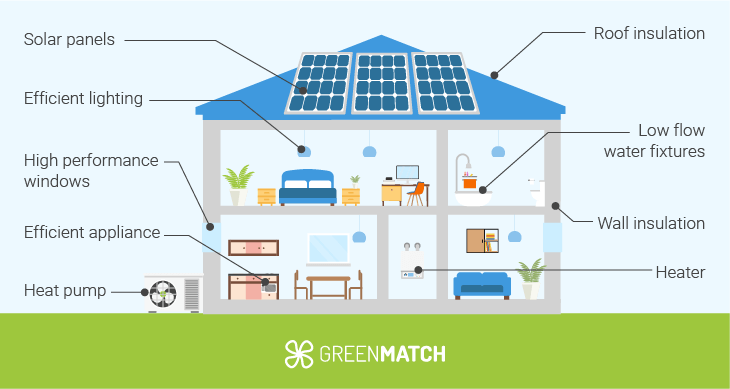
In 2025, mounting energy costs and stricter emissions targets make heating choices central to sustainable living. This report-style overview examines how low-carbon heating technologies and operational best practices combine to lower household emissions, reduce bills and improve indoor air quality. We follow a prototype household—an urban townhouse owned by Anna, a systems engineer who replaced her aging oil boiler with a mixed strategy: an air-source heat pump, targeted hydronic circuits and rooftop solar thermal panels. Her retrofit required staged investment, permit coordination and a professional installer; within two winters she reported measurable utility reductions and improved thermal comfort. The analysis that follows translates Anna’s experience into actionable guidance for homeowners, housing managers and small developers, comparing lifecycle performance, installation constraints and integration strategies with on-site renewables. Expect technical evidence on efficiency (including heat pump COPs and geothermal performance), operational tactics for minimizing distribution losses, and pointers to financing and installation resources that accelerate payback while supporting a sustainable living environment.
En bref — key takeaways: Insulate first to cut baseline demand; heat pumps offer best year‑round efficiency; pair systems with solar or wind to reduce grid carbon; hydronic distribution improves comfort and air quality; targeted retrofits often deliver the fastest payback; use smart controls to optimize zones and schedules; consult certified installers and explore incentives. These steps create resilient, low‑emission homes while protecting household budgets.
How heat pumps enable efficient, low‑carbon heating in homes
Heat pumps work by moving thermal energy instead of burning fuel, delivering three to four units of heat per unit of electricity in favorable conditions. Air‑source units are compact and effective in temperate zones, while ground‑source (geothermal) systems exploit the earth’s stable temperature for higher performance in colder climates.
In Anna’s retrofit an air‑source heat pump replaced baseboard electric resistance heating, halving winter electricity use and cutting operational CO2 compared with her prior oil boiler. For homeowners exploring options, see practical installation tips for eco heating to size equipment correctly and avoid common pitfalls.
Key insight: Properly sized heat pumps paired with low‑loss distribution yield the largest operational savings for many buildings.

Heat pumps: performance, controls and integration
Performance depends on source temperature, compressor design and control strategy. Using smart thermostats and demand‑control algorithms reduces cycling losses and aligns demand with on‑site renewables.
For system integration and smart control best practices, consult research on smart eco heating controls that demonstrate scheduling and occupancy sensing can cut energy use by double‑digit percentages.
Key insight: Controls that coordinate heat pump output with solar generation and storage improve carbon outcomes and economics.
Solar thermal and PV pairing: renewable inputs for year‑round warmth
Solar thermal collectors supply domestic hot water and preheat distribution circuits; photovoltaic (PV) systems can power heat pumps and auxiliary loads. In sunny regions, thermal collectors may provide up to 70% of hot water demand when correctly sized.
Anna’s system uses PV to offset electrical draw during daytime heating peaks and a small thermal loop for water preheat. For guidance on linking renewables and heating, review methods for renewable energy integration to minimize fossil fuel dependence.
Key insight: Combining solar thermal or PV with efficient heat delivery reduces both operating cost and grid emissions intensity.
Practical solar configurations and backup strategies
Choose hydronic or air‑based solar depending on existing distribution: hydronic systems integrate naturally with underfloor heating; solar air collectors pair with forced‑air systems. Backup strategies—small electric heaters, biogas boilers or pellet stoves—ensure comfort during prolonged low‑solar periods.
Key insight: A hybrid design with prioritized renewables preserves reliability while maximizing emissions reductions.
Hydronic distribution and radiant systems for comfort and health
Hydronic systems move heat with water through underfloor tubing or radiators, offering even temperatures and reduced convective dust spread. They are compatible with low‑temperature heat sources like heat pumps and solar thermal collectors.
In retrofit projects, replacing noisy duct blowers with targeted hydronic loops improved Anna’s indoor air quality and allowed her heat pump to run at higher efficiency. Learn more about system options in an eco heating systems overview that compares distribution technologies.
Key insight: Low‑temperature hydronic distribution maximizes heat pump COP and enhances occupant comfort.
Hydronic implementation: boilers, pumps and controls
Hydronic loops require right‑sized pumps, thermostatic control and stratified buffer tanks to smooth load fluctuations. Heat sources can be modular—solar preheat, heat pump primary, pellet or condensing boiler as emergency backup.
Key insight: Effective hydronic control strategies reduce pumping energy and maintain balanced temperatures across zones.
Low‑carbon solid fuel and biomass options: pellets, masonry and modern wood burners
Pellet stoves and modern wood burners use compressed biomass and improved combustion to reduce particulate emissions relative to legacy appliances. Masonry heaters capture and slowly release heat via thermal mass for long‑duration warmth from short, hot burns.
Anna retained a small masonry heater for off‑grid resilience; with certified emissions control it serves as occasional peak support. For lifecycle impacts and fuel sourcing, see analysis of the benefits of eco‑friendly heating.
Key insight: When used responsibly and to code, modern biomass systems can provide resilient, low‑carbon supplemental heat.
Operational considerations and fuel logistics
Biomass systems demand dry, sustainably sourced fuel and safe storage. Maintenance schedules and chimney systems affect emissions; professional commissioning is essential to meet air‑quality standards.
Key insight: Fuel supply chains and appliance certification determine real‑world carbon and particulate outcomes.
Geothermal and wind: high‑performance but site‑dependent solutions
Geothermal heat pumps offer the highest steady‑state efficiency—often reported as 300–400% seasonal performance—because they tap the earth’s stable temperature. Small wind turbines can offset electrical demand where wind resources are reliable, powering heat pumps or electric backup.
Anna evaluated a shallow geothermal loop but chose air‑source plus PV for lower upfront cost; however, in rural properties geothermal often yields the shortest lifecycle cost. For community or large‑scale projects, explore workforce and installation guidance on green energy and heating pathways.
Key insight: High capital systems like geothermal deliver superior lifecycle performance but require site suitability and long‑term planning.
Siting, permitting and risk management
Geothermal trenches or borefields need geological surveys and permits; wind turbines require wind resource assessment and local approvals. Risk management includes assessing noise, land use and maintenance access.
Key insight: Early feasibility studies prevent costly redesigns and speed deployment.
Demand reduction: insulation, zoning and smart controls
Insulation and airtightness are the first technical steps: reducing heat demand multiplies the impact of any subsequent heating upgrade. Start with attic and cavity insulation, then address drafts and window performance.
Combined with zoning and smart systems for energy efficiency, these measures let you run smaller heat sources and exploit on‑site renewables more effectively. Anna’s airtightness retrofit reduced peak load enough to downsize her heat pump by one model, shortening payback.
Key insight: Demand reduction is the most cost‑effective action and should precede major equipment replacement.
Behavioral and control strategies that cut bills
Smart thermostats, staged setbacks and occupancy detection remove wasted heating hours. Load shifting—preheating during solar production—reduces grid emissions and lowers bills.
For practical steps on optimizing operations, review guidance on energy savings estimates that illustrate typical household gains.
Key insight: Control algorithms plus occupant practices can deliver savings comparable to hardware upgrades at low cost.
Financing, incentives and installer selection for sustainable retrofits
Grants, tax credits and low‑interest loans accelerate adoption by lowering initial cost barriers. Professional installers who document performance and warranties reduce operational risk and support access to incentives.
Consult the practical checklist on professional installation tips and the broader resource hub at EcoHeat Guide to identify accredited contractors and incentive pathways.
Key insight: Structured financing and verified installation are decisive factors in achieving expected lifecycle returns.
Choosing the right vendor and product labels
Look for installers with certifications in heat pump and hydronic systems and products meeting recognized performance standards. Brand ecosystems such as EcoHeat Solutions, GreenWarm Innovations and SustainHeat Technologies are examples of market positioning that emphasize efficiency and integration.
Key insight: Vendor selection affects both upfront risk and long‑term performance; require data and references.
Operational case study: Anna’s staged retrofit and ROI
Phase 1: insulation, airtightness and zone controls reduced demand by ~25%, enabling a smaller heat pump. Phase 2: install of an air‑source heat pump and hydronic underfloor on the ground floor. Phase 3: add PV and a small solar thermal preheat loop.
Payback analysis after two winters showed utility savings covering roughly one third of installed cost; projected lifecycle savings and reduced emissions made the plan attractive. For homeowners seeking comparable scenarios, read the practical deployment guide on sustainable eco heating.
Key insight: Staged implementations reduce financial risk and allow lessons learned to inform subsequent investments.
Where to get help and next steps
Start with an energy audit, gather quotes from certified installers and model expected energy flows and payback. Reach out to local programs and consult technical resources such as smart systems for eco heating for design patterns and control strategies.
Final operational insight: Combining demand reduction, efficient heat delivery and renewable supply is the engineering pathway to a sustainable living environment, and coordinated planning delivers predictable outcomes across comfort, cost and carbon.