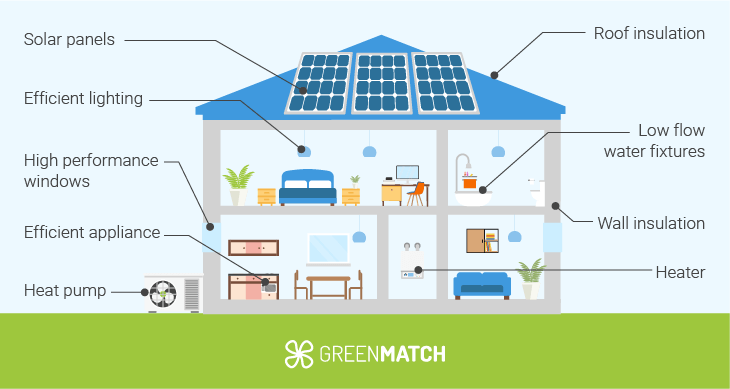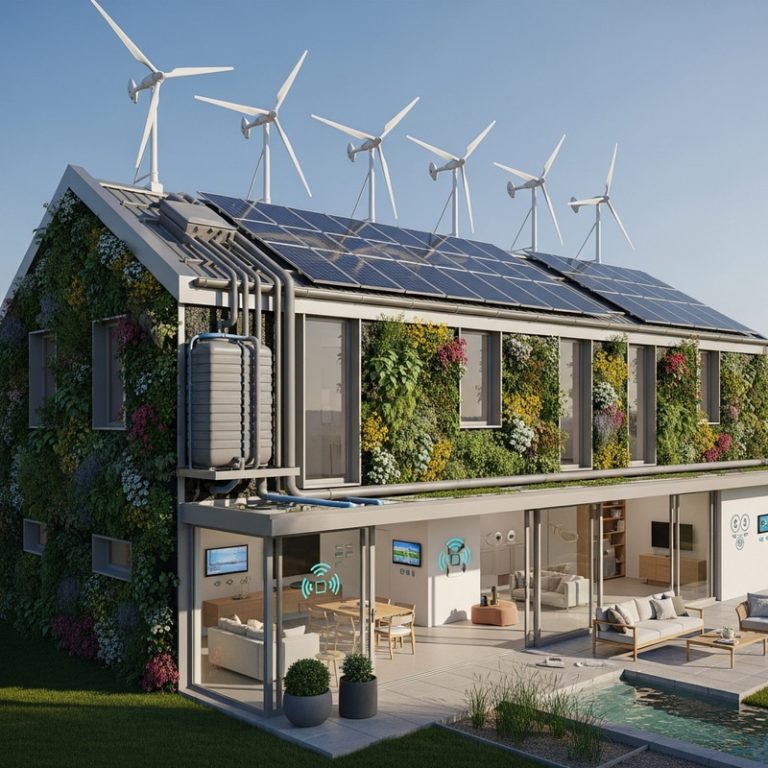
In brief: Heat pumps now deliver multi‑fold efficiencies compared with fossil systems; smart thermostats and AI trim waste by running heating only when needed; government grants reduce upfront costs; pairing solar and storage multiplies savings; hybrid designs blend reliability and low carbon output. These touchpoints define the practical route to greener homes in the next phase of residential energy.
Explore the future of eco heating and sustainable living frames a technical roadmap for homeowners and installers confronting tighter budgets, stricter carbon targets and richer technology choices in 2025. Rising fuel prices and climate commitments concentrate attention on heating, since heating represents roughly 64% of household energy use in the UK, driving demand for systems that lower bills while cutting emissions. The market response fuses mechanical advances—most notably high‑efficiency heat pumps and hydrogen-ready boilers—with digital controls that learn occupancy patterns and grid signals. Practical policy support, from retrofit grants to demonstration pilots, lowers barriers and accelerates deployment of proven options. This article follows a homeowner, Maya, and her retrofit journey with a suite of solutions from EcoNest Thermal and local installers, illustrating technical trade‑offs, cost trajectories and real performance data measured across one winter. Embedded case details show where investments produce rapid payback, and where hybrid approaches make sense for older properties. Read on for actionable guidance, market links and technical insights to plan an efficient, resilient heating upgrade.
Why energy efficiency defines the future of eco heating
Energy efficiency is the operational backbone for decarbonising homes; reducing demand shrinks required generation and eases electrification strain on the grid. When a home cuts heat demand through insulation, controls and efficient plant, the same renewable share delivers outsized carbon reductions.
The policy environment and consumer economics reinforce this: incentive schemes and lower long‑run bills make upgrades affordable and attractive. For practical retrofit steps and installer guidance, consult installation tips for eco heating. Key insight: target demand reduction first, then apply high‑performance heating to maximise benefit.

Heat pumps as the operational game‑changer
Air source and ground source heat pumps extract ambient thermal energy and can deliver roughly three to four times the heat energy per unit of electricity consumed. For homeowners like Maya, switching from a high‑age gas boiler to an air source unit cut winter consumption by a large margin and simplified controls.
Performance depends on building fabric and system sizing; pairing heat pumps with low‑temperature emitters often yields best results. For quantified saving strategies and household case studies, see this practical guide to energy savings with eco heating. Insight: correct design and insulation are as important as the pump itself.
Hydrogen, biomass and hybrid arrangements for resilient decarbonisation
Hydrogen boilers offer a pathway to near‑zero onsite emissions where hydrogen supply exists; burning hydrogen produces water vapor rather than CO2. Trials across the UK continue to test materials compatibility and network readiness before mass roll‑out.
Biomass boilers remain a pragmatic choice in rural contexts with local sustainable fuel supplies, delivering carbon‑managed heat when fuel sourcing and emissions controls are well governed. Hybrid systems that combine heat pumps with hydrogen or modern condensing boilers provide operational flexibility and can lower lifecycle costs. For broader context on sustainable options and policy, consult sustainable eco heating. Insight: hybrids smooth transition risks while enabling deep decarbonisation.
Smart heating, AI and the Internet of Things
Smart thermostats, sensors and home automation create a control layer that reduces waste by matching output to occupancy, weather and even price signals. AI models can predict short‑term demand and pre‑heat efficiently, lowering grid peaks and consumer bills.
Interoperability is crucial: choose devices that integrate with PV inverters, batteries and heat pumps. Further reading on connected systems and consumer benefits is available at smart eco heating. Insight: controls convert installed efficiency into realised savings.
Practical steps to plan an upgraded, sustainable heating system
Begin with a professional assessment to identify heat losses and distribution limits; this diagnostic shapes the most cost‑effective solution. Maya’s adviser modelled scenarios, showing that cavity wall insulation plus a heat pump yielded a quicker payback than pump-only replacement in her semi‑detached home.
Explore funding and calculated returns: grants reduce capital barriers and can make higher‑efficiency choices viable. For detailed comparisons between options and effect on household bills, review eco heating and energy bills and the carbon implications at eco heating carbon footprint. Insight: combine fabric improvement, smart controls and renewable generation to secure predictable savings.
Market players, procurement and installer selection
Choosing a supplier with full technical support and certification matters more than headline costs. Companies such as GreenFuture Heating, RenewHeat Systems and VerdantHeat Technologies typify the new generation of integrators that pair equipment with monitoring services.
Look for installers who provide modeled energy outcomes and performance guarantees. For a deeper exploration of benefits and installation considerations, see benefits of eco heating. Insight: procurement is a systems decision — not just a product purchase.
Emerging business models and energy storage for flexible homes
Battery and thermal storage enable homes to shift consumption to low‑carbon windows, store excess PV output and participate in grid flexibility markets. Combined with smart controls, storage reduces reliance on peak grid energy and improves self‑consumption.
New service models—performance contracting and heat‑as‑a‑service—allow households to access high‑end systems with predictable payments rather than upfront capital. Firms like NextGen EcoHeat, EcoPulse Living and SustainWarm Solutions are piloting such offerings. Insight: storage and new commercial models make advanced systems accessible without major capital outlay.
Case study: Maya’s retrofit — measured outcomes
Maya replaced her 15‑year boiler with an air source heat pump, added 6 kWp of rooftop PV and installed a smart thermostat. After one winter, her meter readings showed a 45% reduction in gas use and a 30% cut in total energy cost, validating the modeled projections.
The project used a staged approach: fabric upgrades, then heat source swap, then controls and PV. This sequencing minimized disruption and maximised grant eligibility. Final insight: phased retrofits enable homeowners to manage cash flow while progressively decarbonising.
Where to learn more and next actions for homeowners
For hands‑on installation guidance and to compare specific retrofit measures, consult the practical resources on installation and green energy at installation tips for eco heating and renewable energy and eco heating. These resources complement technical quotes and on‑site surveys.
Supplier selection, performance monitoring and access to grants can be orchestrated through specialist integrators; names like PurePlanet Heating, EcoHeat Innovations and FutureFlow Heating represent the collaborative vendors emerging in the market. Next action: commission a survey, prioritize insulation, and request modeled outcomes from two installers to compare scenarios and cash flows. Insight: start with diagnostics, then align technology to measured need — that is the reproducible path to sustainable, cost‑effective home heating.