As winter tightens its grip, keeping a home warm need not increase its environmental toll. Across climates, residential heating represents one of the largest household energy draws, so choosing the right system and habits has outsized effects on both emissions and bills. This piece follows Lena, a mid-sized‑city homeowner who replaced an aging furnace with a hybrid approach, to show practical pathways from assessment to operation. Lena’s priorities were clear: lower lifetime costs, maintain indoor air quality, and align with local incentives. She evaluated options — heat pumps, radiant floors, and solar thermal — against constraints like upfront capital, roof orientation and existing ductwork. Technical trade‑offs matter: air‑source heat pumps deliver strong seasonal COPs in moderate climates, while ground‑source systems offer stable performance where space and budget allow. Integrating controls and zoning amplified gains: a smart thermostat and targeted zoned heating cut wasted run‑time and prioritized occupied rooms. Along Lena’s path, installers from firms such as EcoHeat Solutions and GreenFlow Heating provided bids; RenewHeat Innovations supplied the geothermal design; and EcoTherm Living advised on insulation and ventilation. The result: a measurable drop in winter energy consumption and a clear upgrade route for homeowners seeking durable, verifiable reductions in both cost and carbon. This dossier maps the technical choices, maintenance regimes and financing routes that make sustainable heating attainable.
En bref — key takeaways
Assess building envelope: upgrade insulation and air sealing before major system changes.
Choose the right source: air‑source heat pumps for moderate zones; ground‑source or hybrid systems for colder sites.
Integrate renewables: pair solar thermal with backup heat to lower grid dependence.
Optimize controls: zoning and smart thermostats reduce runtime and increase occupant comfort.
Plan maintenance: scheduled tune‑ups, filter changes and duct sealing preserve efficiency and lifespan.
Choosing sustainable home heating systems that fit your house and climate
Problem: Many homeowners default to replacing like‑for‑like, perpetuating inefficiencies. Systems sized or selected without regard to building fabric often underperform.
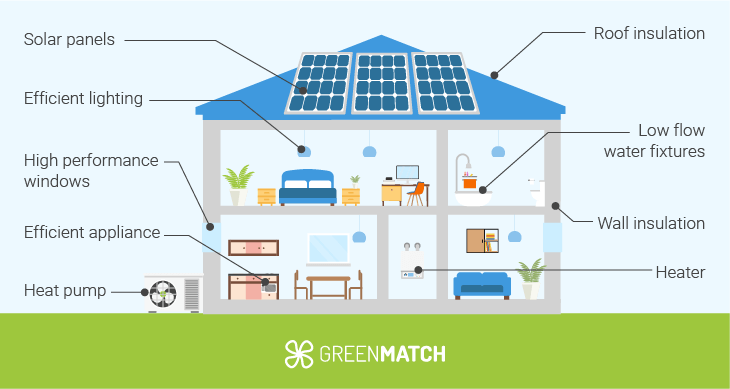
Solution: Conduct a simple energy audit, then weigh options: heat pumps for their high coefficient of performance; radiant floor systems for steady, low‑velocity heat; and high‑efficiency gas furnaces only where gas infrastructure and cold climates dictate. For technical guidance on system types and how they align with renewables, consult a specialist resource such as eco heating systems that explains matching loads and sources.
Example: In Lena’s retrofit, combining an air‑source heat pump with improved attic insulation cut peak heat demand by over 30%, enabling a smaller, less expensive unit. Choosing the correct system starts with load reduction.

Heat pumps, geothermal and hybrid configurations: technical comparison and sizing
Problem: Mis-sizing reduces COP and shortens lifecycle. Air‑source heat pumps lose some efficiency at very low outdoor temps; ground‑source (geothermal) units avoid that but require more site work.
Solution: Use heat‑load calculations (degree‑days method, envelope R‑values and infiltration rates) to size units. Consider hybrid systems that switch to a high‑efficiency gas furnace only during extreme cold. For design recommendations and benchmarks, see manufacturer and sector guidance like renewable energy for heating.
Example: A multi‑level home reduced compressor cycling by employing a two‑stage air‑source heat pump paired with zoned dampers from GreenWarm Technologies. Proper sizing sustains efficiency and occupant comfort.
Solar thermal and smart integration to reduce grid dependence
Problem: Solar thermal is underused because homeowners fear intermittency and complex integration with backup systems. Uncoordinated systems waste collected heat.
Solution: Combine solar collectors with an insulated buffer tank and intelligent control logic so heat is stored and dispatched when needed. Integrate with smart thermostats and building automation to prioritize solar heat before invoking electric backup. For planning and integration tips, review practical guides such as eco heating installation and operational tactics from smart eco heating.
Example: Lena paired a compact solar thermal array with her heat‑pump water loop; an adaptive controller from EcoPulse Heating reduced auxiliary electric use on cloudy days. Smart integration turns intermittent solar energy into dependable warmth.
Radiant heating and indoor air quality — balancing comfort and ventilation
Problem: Forced‑air systems can amplify dust and allergens; switching to radiant systems sometimes raises concerns about humidity control and ventilation.
Solution: Radiant floor heating lowers stratification and reduces air movement, improving perceived comfort and reducing allergen circulation. Pair radiant systems with a dedicated mechanical ventilation system (heat recovery ventilator) to maintain IAQ without sacrificing efficiency. For efficiency comparisons and health benefits, see analysis at benefits of eco-friendly heating systems.
Example: A retrofitted bungalow installed electric radiant mats in a two‑room addition and added an ERV; occupants reported fewer respiratory symptoms and more even thermal comfort. Radiant solutions can enhance both comfort and indoor air quality when combined with proper ventilation.
Maintenance, controls and operational best practices for long service life
Problem: Even the most efficient system will lose performance through neglect: dirty filters, leaking ducts, and misconfigured controls cause energy waste.
Solution: Implement a regimented maintenance plan: annual professional inspections, monthly filter checks, seasonal duct leak testing and sealing, and firmware updates for smart thermostats. Use zoning to avoid heating unused areas. Practical maintenance advice and schedules are covered in resources like eco heating installation tips and performance optimization posts such as energy savings with eco heating.
Example: A homeowner using services from SustainHeat Systems and PureHeat Eco documented a 12% efficiency recovery after a duct sealing campaign and two HVAC tune‑ups. Consistent maintenance preserves efficiency and lowers total cost of ownership.
Zoning, smart thermostats and behavioral strategies that lower runtime
Problem: Whole‑house thermostats command unnecessary runtime in unoccupied rooms and during predictable absences.
Solution: Deploy multi‑zone thermostats, occupancy sensors and geofencing rules. Combine behavioral changes — modest setpoint adjustments and scheduled setbacks — with automation to compound savings. For smart system case studies and energy‑management strategies, consult smart systems for energy efficiency.
Example: After installing zoned controls and a smart schedule, Lena’s household reduced heating hours by nearly 20% without reducing comfort. Smart controls align operation with real occupancy and reduce wasted energy.
Financing, incentives and real-world case studies that make systems viable
Problem: Upfront costs remain the primary barrier to adopting geothermal, solar thermal or premium heat pumps.
Solution: Leverage government rebates, utility incentives and financing mechanisms such as PACE or energy efficiency loans. Many regions in 2025 expanded rebates for heat pumps and solar hybrids; aggregated incentives can cut payback horizons substantially. For incentive navigators and installer networks, use resources like energy savings eco heating and overview pages at eco heating for sustainable living.
Example: A small condominium association worked with SustainWarm Co. and accessed a municipal rebate to fund a shared ground‑loop system; member bills dropped and property value improved. Proper financing and incentives can make advanced systems cost‑effective within typical ownership horizons.
Case studies: brands and installers delivering measurable results
Problem: Homeowners struggle to verify claims and compare vendor proposals.
Solution: Request longitudinal performance data, references and third‑party energy models. Companies like EarthSmart Heat and RenewHeat Innovations increasingly provide monitored installs and energy dashboards. For lifecycle analyses and carbon outcomes, consult studies such as those summarized on eco heating carbon footprint.
Example: A monitored retrofit with EcoTherm Living reported a portfolio‑level 40% reduction in seasonal heating energy across seven homes over two winters. Documented performance builds confidence and informs future projects.