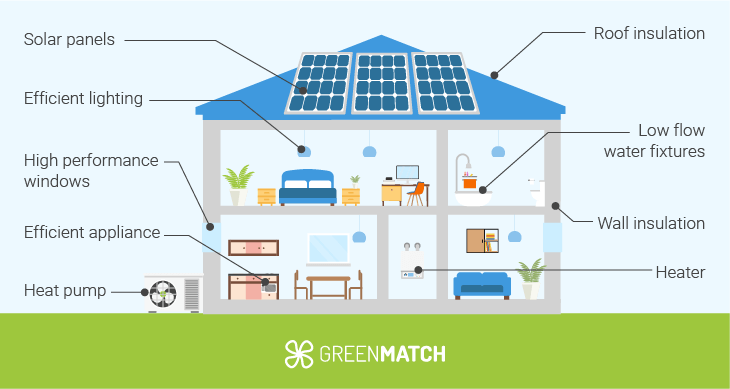
Eco heating upgrades for better energy savings are no longer optional for homeowners facing rising utility bills and tighter climate goals. The average American household still spends over $2,000 annually on energy, largely for space conditioning, and targeted interventions can cut that load dramatically. This article follows Alex, a midwestern homeowner who, in 2025, stages a measured retrofit: starting with a professional audit, Alex sequences improvements from controls and air sealing to a hybrid heat-pump water heater and rooftop PV with battery backup. The approach minimizes disruption while maximizing return on investment. Practical data guides each decision: smart thermostats typically trim HVAC energy by 10–15%, upgraded insulation and air sealing reduce heating/cooling by up to 20–30%, and pairing solar PV with storage has median paybacks in the 6–12 year range when credits are applied. Incentives remain significant—federal and state programs plus utility rebates lower upfront costs and speed payback. Along the way, Alex tests product lines from niche integrators like EcoHeat Solutions and community installers such as GreenSave Heating, comparing lifecycle savings rather than sticker price. The technical path below prioritizes measures by payback and system interaction, provides actionable installation tips, and connects to resources for deeper planning.
En bref: Smart thermostats cut HVAC use quickly; air sealing & insulation deliver the largest persistent savings; heat pump water heaters reduce water-heating loads significantly; solar + battery shifts peak costs and raises resilience; whole-house energy management ties systems together for continuous optimization.
Top eco heating upgrades for better energy savings: prioritized roadmap
Start with diagnostic data. A blower-door test and thermal scan reveal the envelope weaknesses that drive heating losses. Alex scheduled a professional audit that identified attic bypasses and poorly insulated knee walls; fixing those delivered immediate temperature stability.
Prioritization should weigh payback, disruption, and interaction effects. For example, improving insulation shrinks required HVAC capacity, which can justify downsizing to a high-efficiency heat pump. Those system interactions are central to an effective plan.

Smart home controls and advanced thermostats
Problem: Traditional thermostats hold constant setpoints and ignore occupancy, leading to wasted heating during absences. Solution: Install adaptive controls that use occupancy sensing, geofencing, and local weather integration to optimize setpoints.
Practical example: Alex replaced a mechanical thermostat with a learning model that reduced seasonal HVAC runtime by about 12%. He linked the controller to a home energy management platform to shift heating cycles to off-peak periods. For implementation guidance, consult the smart systems guide and follow installer checklists from local providers.
Insight: Upgrading controls is a low-disruption, high-impact first step that improves comfort while preparing the home for deeper upgrades.
High-efficiency HVAC and heat pump integration
Problem: Legacy furnaces and aging compressors operate at lower lifecycles and higher emissions. Solution: Replace obsolete equipment with high-AFUE furnaces only where gas makes sense, or preferably electrified heat pumps with high HSPF/SEER ratings.
Case: Alex selected a cold-climate heat pump and zoned controls. The system reduced annual heating energy by roughly 40–60% relative to his previous electric resistance baseline. He compared quotes from regional installers comparable to EfficientHeat Pros and prioritized models with proven low-temperature performance.
Insight: Matching heat pump capacity to a tightened envelope yields the best long-term efficiency and lowers operating cost volatility.
Watching a technical walkthrough expedited Alex’s commissioning process; installers followed manufacturer startup sequences and measured refrigerant charge and airflow, which are critical for warranty compliance.
Insulation, air sealing and envelope upgrades
Problem: Uncontrolled infiltration and underperforming insulation create the largest sustained energy drains. Solution: Target attic, rim joists, and duct sealing first, then address wall cavities where payback justifies deeper work.
Example: A contractor tightened Alex’s envelope and added insulation to reach recommended R-values for his climate band, cutting peak load and enabling a smaller heat pump. The audit-based approach avoided over-investment in less effective areas.
Insight: Envelope work amplifies the benefits of all downstream systems; treat it as the multiplying factor in any retrofit strategy.
Water heating: heat pump water heaters and system strategies
Problem: Water heating consumes roughly ~18% of household energy. Solution: Replace legacy tanks with heat pump water heaters or point-of-use systems, and optimize schedules to off-peak electricity.
Implementation note: Alex installed a heat pump water heater with smart scheduling that leverages time-of-use rates; projected savings were $300–$600 annually. Manufacturers and installers are listed in technical installation resources such as professional installation guidance.
Insight: Water-heater electrification is a cost-effective decarbonization lever with strong operational savings.
Solar photovoltaic systems and battery storage
Problem: Grid electricity costs and peak demand charges inflate operational budgets. Solution: Add rooftop PV sized to on-site loads and pair it with battery storage to capture excess generation and cover peak-use periods.
Case study: Alex sized his system to offset daytime loads and sized the battery to cover evening peak heating cycles. With the available 30% tax credit and local rebates, payback estimates fell into the 6–10 year window. For comparative analysis of renewable options see renewable energy heating options.
Insight: Solar plus storage transforms the economics of electrified heating, especially when paired with load-shifting controls.
Supplementary video resources clarified inverter sizing and battery dispatch strategies for Alex, preventing oversizing and ensuring long-term performance.
Windows, doors and glazing improvements
Problem: Single-pane or poorly sealed units cause measurable gains and losses. Solution: Replace with triple-pane, low-E glazed units and upgrade framing/installation practices to prevent thermal bridges.
Alex prioritized south-facing glazing with dynamic shading and considered smart shades controlled by his automation system. These measures reduced solar gain in summer while preserving passive winter gain.
Insight: Targeted window upgrades can reduce seasonal HVAC swings and improve occupant comfort with moderate payback.
Whole-house ventilation and indoor air quality
Problem: Tightly sealed homes need controlled ventilation to maintain air quality without losing energy. Solution: Install HRV/ERV systems with demand control based on CO2 and humidity sensors.
Alex installed an ERV that recovers heat from exhaust air, paired with sensors that modulate flow. The system preserved energy while keeping indoor air healthy during winter sealing measures.
Insight: Balanced ventilation preserves envelope efficiency gains and is required for healthy, high-performance homes.
Smart water and appliance management
Problem: Water waste and inefficient appliances increase both energy and water costs. Solution: Deploy low-flow fixtures, smart irrigation controllers, and ENERGY STAR appliances with networked scheduling.
Operational detail: Alex integrated leak detection and an irrigation controller that uses local weather and soil moisture data—cutting outdoor water use significantly. For practical water-saving tactics reference eco heating tips.
Insight: Water-side optimizations compound energy savings and reduce maintenance risk over time.
Comprehensive home energy management and integration
Problem: Isolated upgrades underperform if not orchestrated. Solution: Use a home energy management system (HEMS) to coordinate HVAC, PV, storage, water heating, and smart plugs.
Alex’s HEMS shifted loads to midday PV production, reduced peak demand, and learned household patterns to fine-tune setpoints. Product ecosystems from providers like EcoSmart Upgrades, EnergyWise Heating, and EcoEnergy Heating were evaluated during procurement for interoperability and open APIs. For architecture patterns and integration best practices see the control systems resource.
Insight: Integration converts a set of efficient devices into a resilient, low-cost system that adapts and improves over time.
Financing, incentives and implementation pathways for homeowners
Problem: Upfront costs deter many homeowners despite attractive lifecycle returns. Solution: Layer incentives, tax credits, and utility rebates and sequence work to match cashflow and payback priorities.
Example financing pathway: Alex began with no-/low-interest utility financing for insulation and controls, used state rebates for heat pump installation, and applied the federal solar tax credit to his PV+storage purchase. Detailed steps and local incentive research can be found at guides such as energy savings resources and the carbon footprint analysis for prioritizing measures.
Insight: Layered financing and staged implementation accelerate adoption and lower perceived risk.
Vendors, installer selection and warranties
Problem: Performance depends on quality of installation and commissioning. Solution: Vet installers on documented performance, commissioning protocols, and long-term service plans.
Buyer strategy: Alex evaluated bids from companies akin to GreenGlow Heating, SustainHeat Systems, and regional teams such as PureSave Heating, scoring them on measured performance metrics and monitoring offerings. Require detailed commissioning reports and performance guarantees.
Insight: Procurement diligence protects savings and ensures systems deliver expected efficiency in-field.
Throughout the retrofit, Alex documented energy use and shared results with a neighborhood sustainability group; this social proof accelerated adoption among neighbors and built collective demand for installers. For step-by-step installation advice and installer checklists consult installation tips and the green energy heating technical primers.